Unlearning the armour

Small Experiments for Better Choices Under Pressure Without Losing Us, the Humans
These are 52 powerful, two-minute experiments anyone can try. Together, they form a programme designed to help our community rise above today’s high stress levels and build real resilience—through small, intentional actions that fit into everyday life.
How often have you been told you can’t change the world? Who decided that? What’s really stopping you?
With inner strength, you can become a SUPERHERO.
Every superhero starts with self-belief—then learns how to master their environment. And that’s where we come in. We’re here to help you unlock your power and begin the journey.
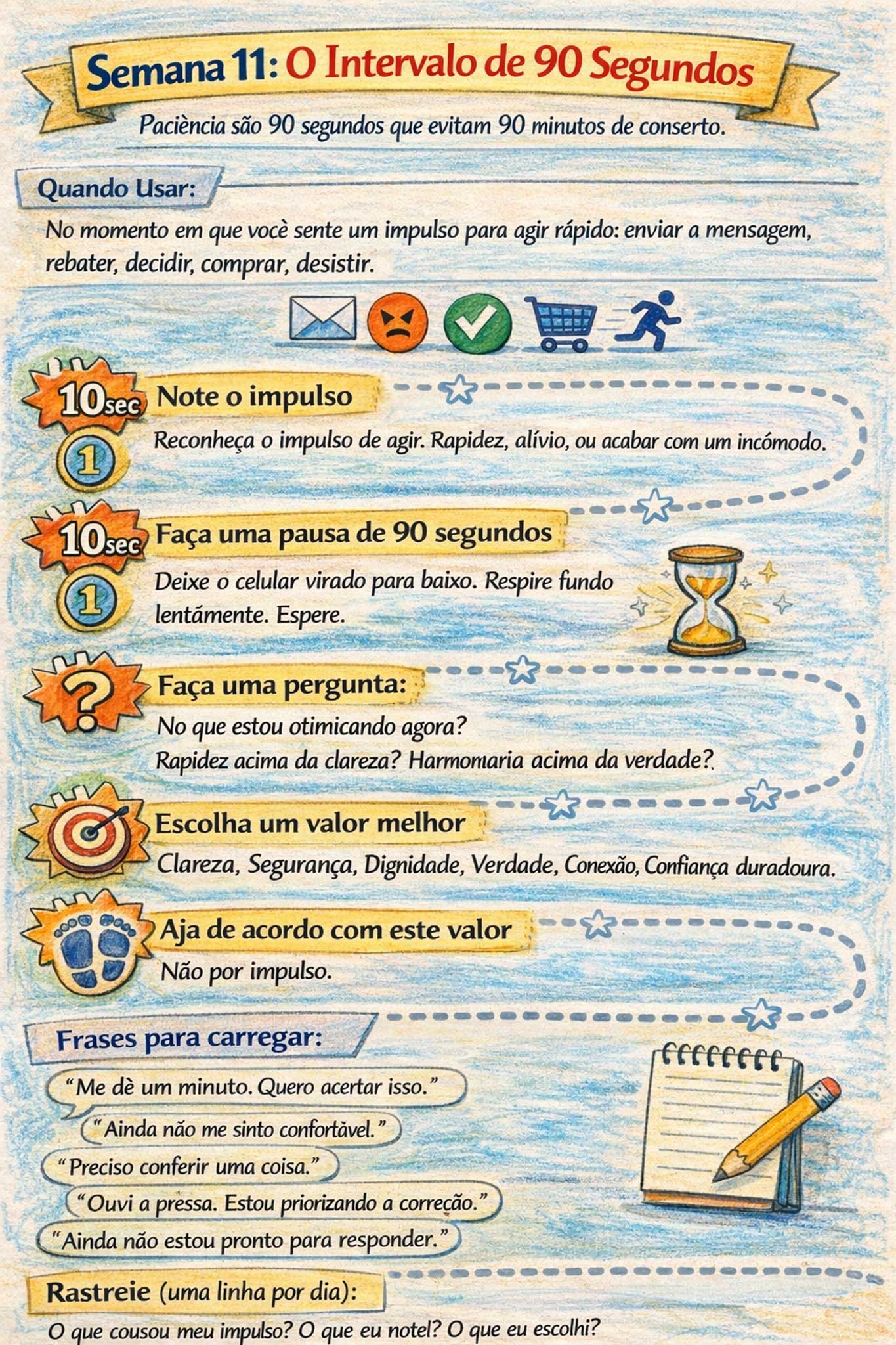
 Para visualizar o pôster desta semana em português, clique aqui: Semana 11: O Intervalo de 90 Segundos
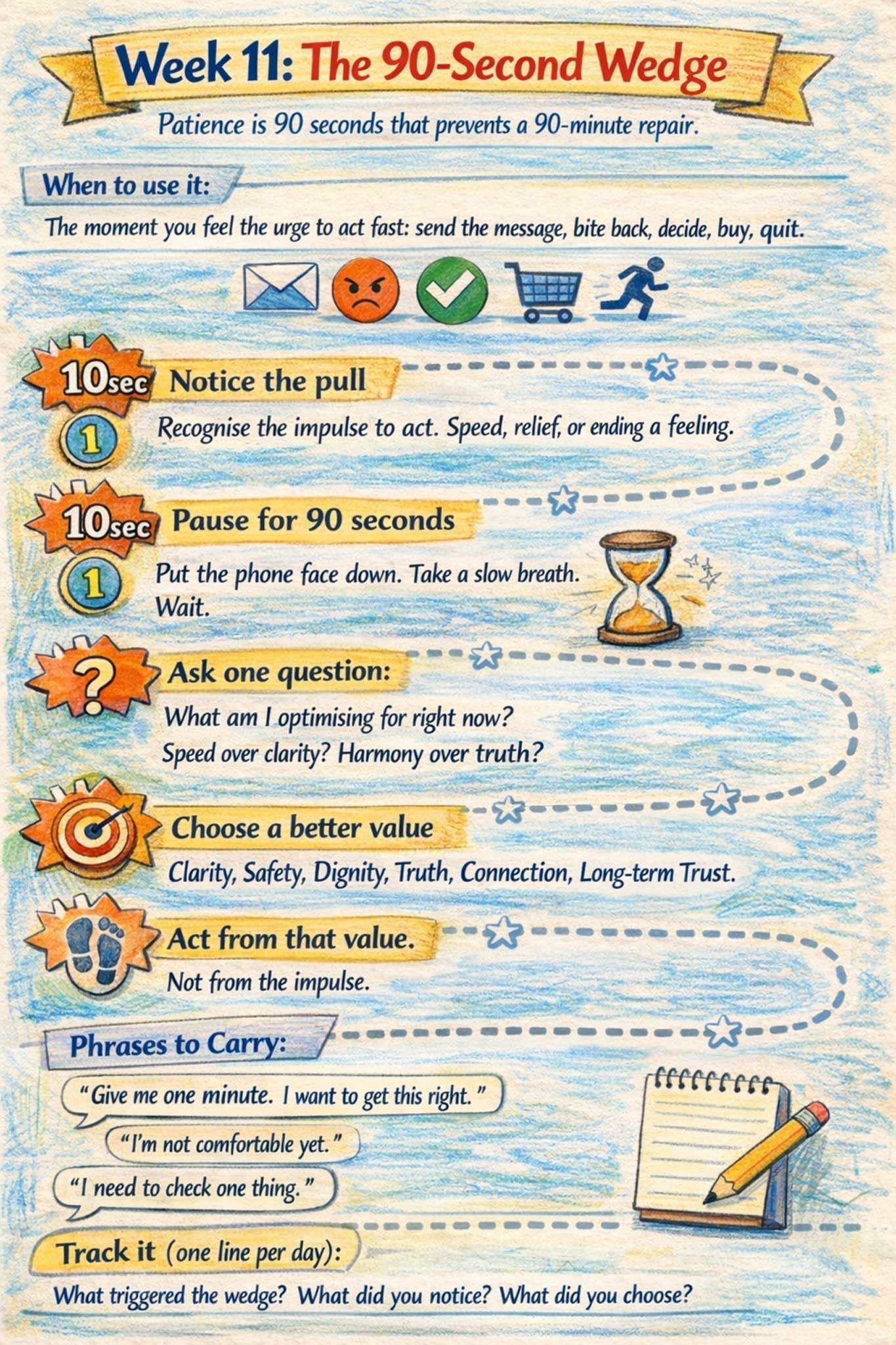
The 90-Second Wedge is where awareness becomes practice. Last week invited you to loosen your grip on certainty — to say “I don’t know yet” instead of rushing to conclusions. This week builds on that by interrupting something even faster: the urge to act. Because often, the problem isn’t what we think — it’s how quickly we move from feeling to doing. A message sent too soon, a reaction we can’t take back, a decision made just to relieve discomfort.
This practice creates a small but powerful gap between impulse and action. In those 90 seconds, nothing dramatic happens on the outside — but internally, everything can shift. You notice the pull, you pause, and you choose what actually matters instead of what feels urgent. Over time, this wedge becomes a kind of quiet strength: the ability to stay with discomfort just long enough to act with clarity, dignity, and intention — not just speed.
The audio of this segement of Dr Sarah On Call.
- Details
Certainty vs. Humility
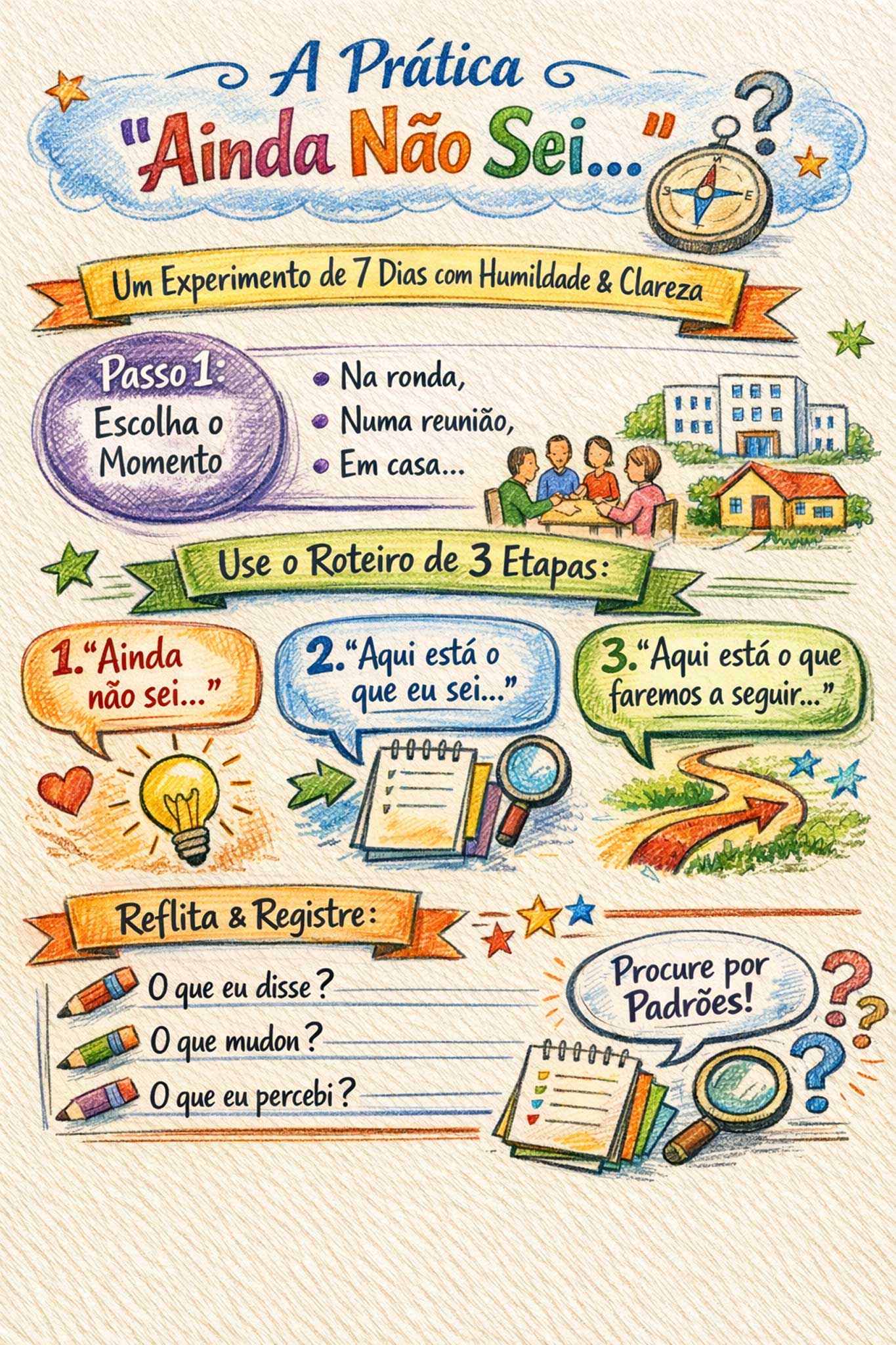
 Para visualizar o pôster desta semana em português, clique aqui: [Semana 10: A Prática "Ainda Não Sei..."]
We often feel a crushing pressure to perform "certainty theatre"—a performance of total competence where we feel we must have every answer immediately. While common in professional life, this is equally draining at home and in schools; parents often feel they must project absolute authority, and teenagers face intense pressure to look like they are in total control of their lives. However, pretending to be certain when we are not is a "short-term loan" taken out against long-term trust. True humility is not weakness or a lack of expertise; it is the self-awareness to recognize the limits of that expertise so that others feel safe to contribute what they know.
The "I Don't Know Yet" practice is a tool for any high-pressure environment, from the dinner table to the boardroom. Admitting uncertainty becomes a powerful act of leadership the moment it is paired with a clear orientation. When a parent, teacher, or leader says, "I don’t know the answer yet, but here is what we are going to do next," they model that uncertainty is survivable and that asking for help is a sign of strength, not failure. This shift lowers defensiveness in the room, replacing performance with genuine connection and more informed decision-making.
One Small Step for Humility
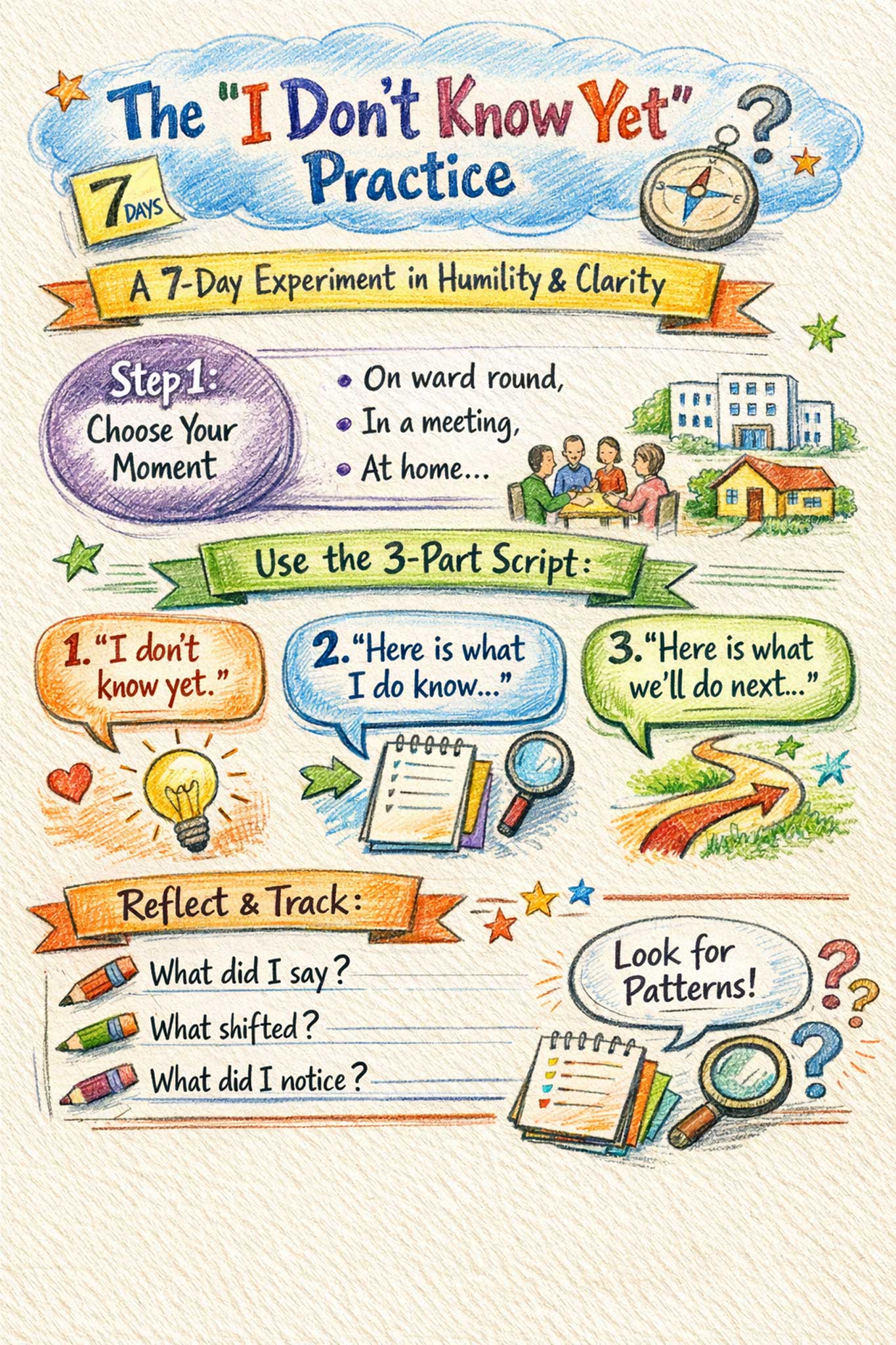
To begin drawing your edges with clarity and kindness, try this 7-day experiment:
* Choose Your Moment: Identify one daily situation — with a partner, a child, or a colleague — where you feel the urge to perform total certainty.
* Use the 3-Part Script:
- "I don't know yet."
- "Here is what I do know."
- "Here is what we'll do next."
* Reflect & Track: Briefly note what you said, how the dynamic in the room shifted, and what you noticed about your own internal sense of relief or anxiety.
* Look for Patterns: Notice which environments make it hardest to be honest and where your humility actually strengthened your connection with others.
* The Check-in: Remind yourself that you look weak only if you stop at "I don't know"—humility with a next step is leadership
The audio of this segement of Dr Sarah On Call.
- Details
 Finding Your Center
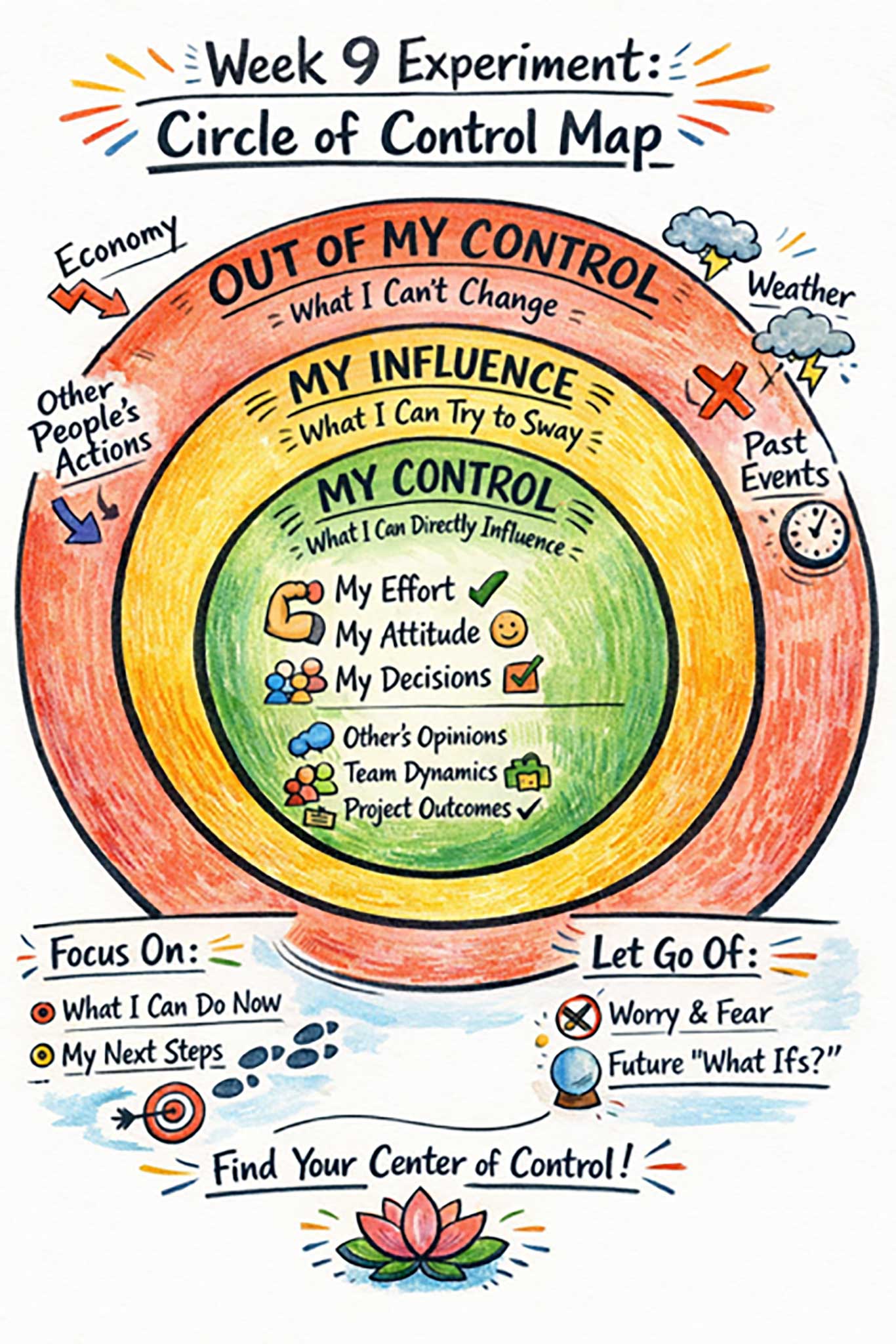
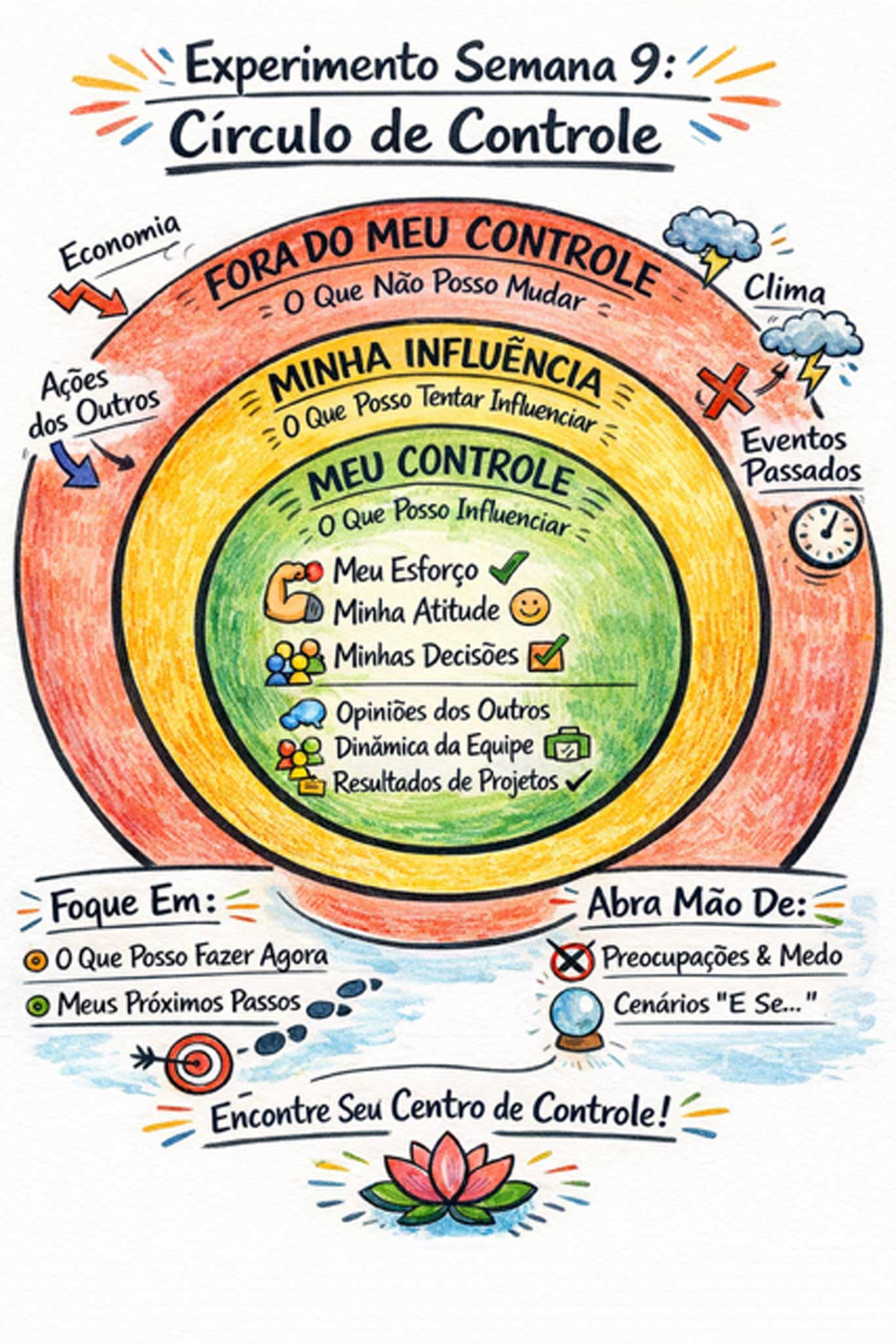
Para visualizar o pôster desta semana em português, clique aqui: Semana 9: O Mapa do Círculo de Controle
This week is about energy management.
In high-pressure environments, we often feel a sense of "systemic overwhelm"—the crushing weight of things we cannot fix. We worry about the economy, the weather, past mistakes, or the unpredictable actions of others. When we give our attention to these "Outer Circle" elements, we leak energy, leaving us exhausted and feeling powerless.
Unlearning the armour means recognizing that we don’t have to carry the weight of the things we cannot change. By mapping out our concerns, we can distinguish between what is Out of My Control, what is within My Influence, and what is under My Control.
The goal isn't to become indifferent to the world, but to become effective within it. When we stop trying to "control" the weather or someone else's opinion and instead focus on our own Effort, Attitude, and Decisions, we find our "Center of Control." This is where our power resides. Clarity here doesn't just reduce anxiety; it transforms "What if?" into "What now?"
Mapping Your Focus
- To reclaim your energy and find your center, try this practice:
- Identify the Stressor: Take a moment to think about something currently weighing on your mind.
- Map the Circles: Ask yourself: "Can I change this (Control), sway this (Influence), or must I accept this (Out of Control)?"
- Focus on the "Now": If it’s in the outer ring, practice the art of letting go. If it’s in the center, identify one small "Next Step" you can take right now.
- Let Go of the "What Ifs": Replace the fear of the future with the reality of your current agency.
- The Check-in: Remind yourself that you cannot control the storm, but you can always control how you sail the ship.
The audio of this segement of Dr Sarah On Call.
- Details
 Visualisation, Process, and Framing Your Story
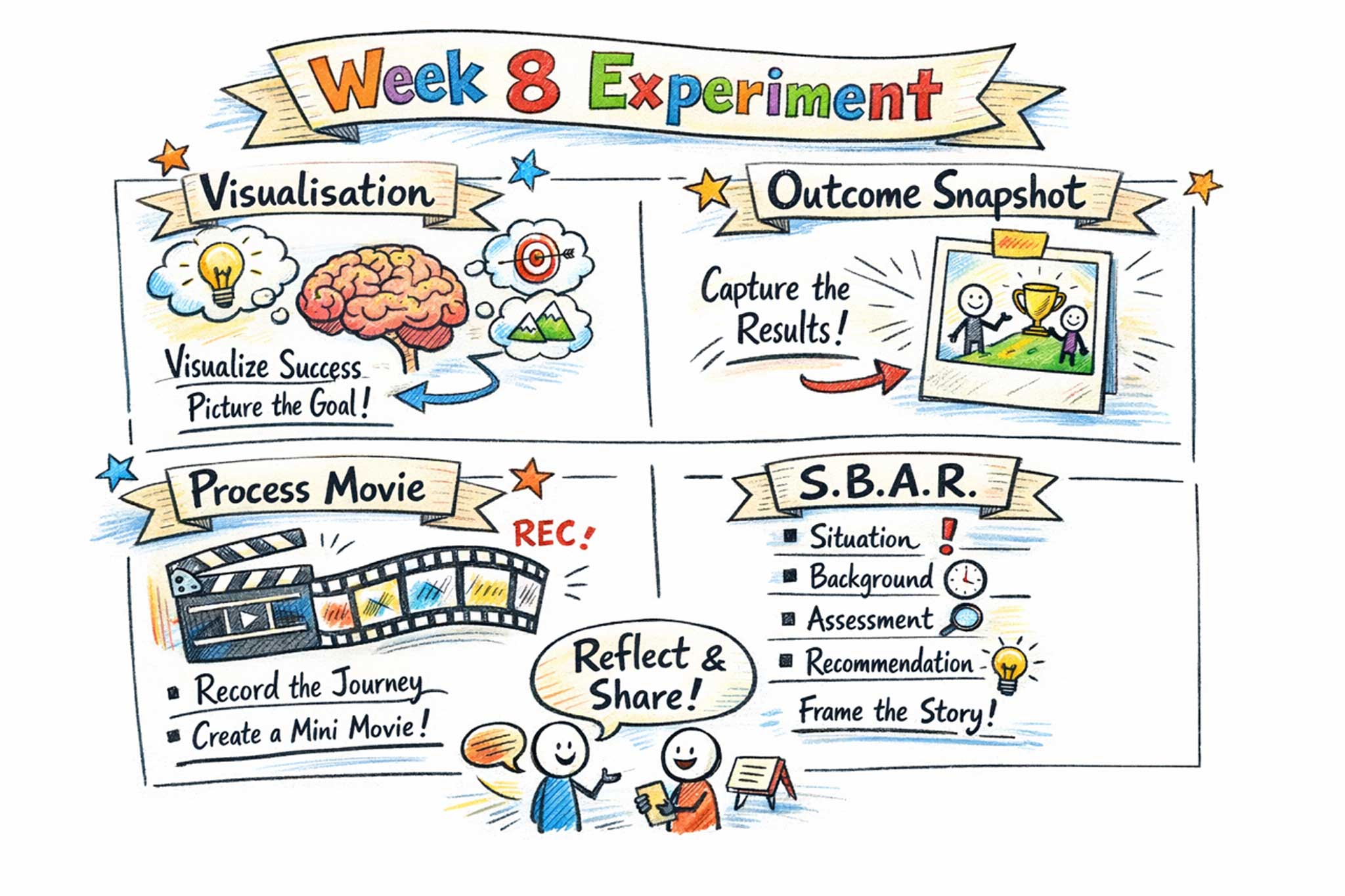
Para visualizar o pôster desta semana em português, clique aqui: Semana 8: Vendo para Alcançar
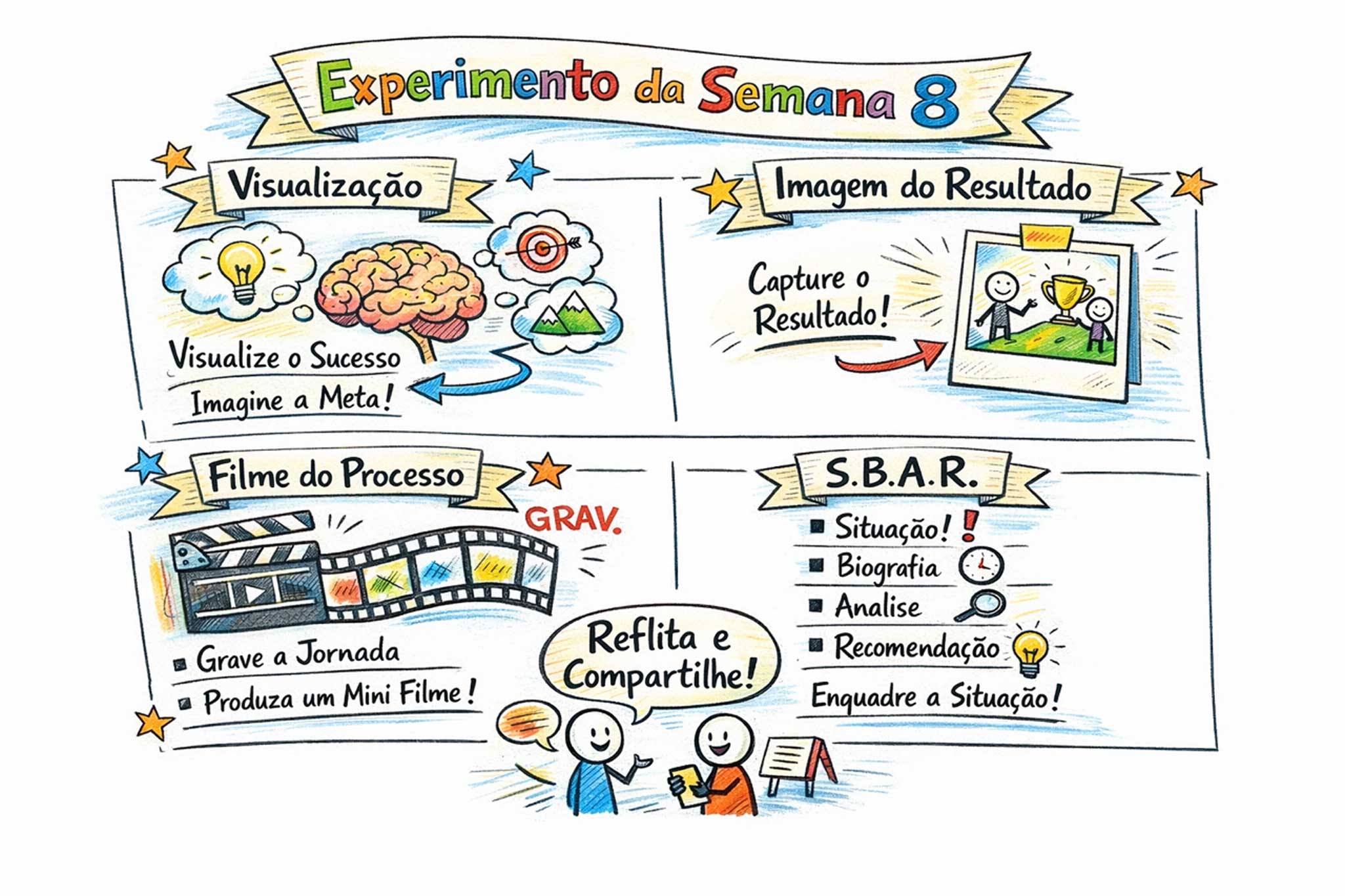
Having spent seven weeks building our inner foundations — pausing, getting curious, recognising our armour, holding our edges — this week we look forward. Resilience isn't only about protecting what we have. It's also about being able to picture where we're going.
This week's experiment brings together four tools:
- Visualisation — picture the goal
- Process Movie — record the journey honestly
- Outcome Snapshot — capture what actually happened
- S.B.A.R. — Situation, Background, Assessment, Recommendation — frame the story clearly
Pick one real goal or challenge. Try all four steps. Notice whether having a structure to hold your experience changes how you feel about it.
The audio of this segement of Dr Sarah On Call.
- Details
Values as Verbs
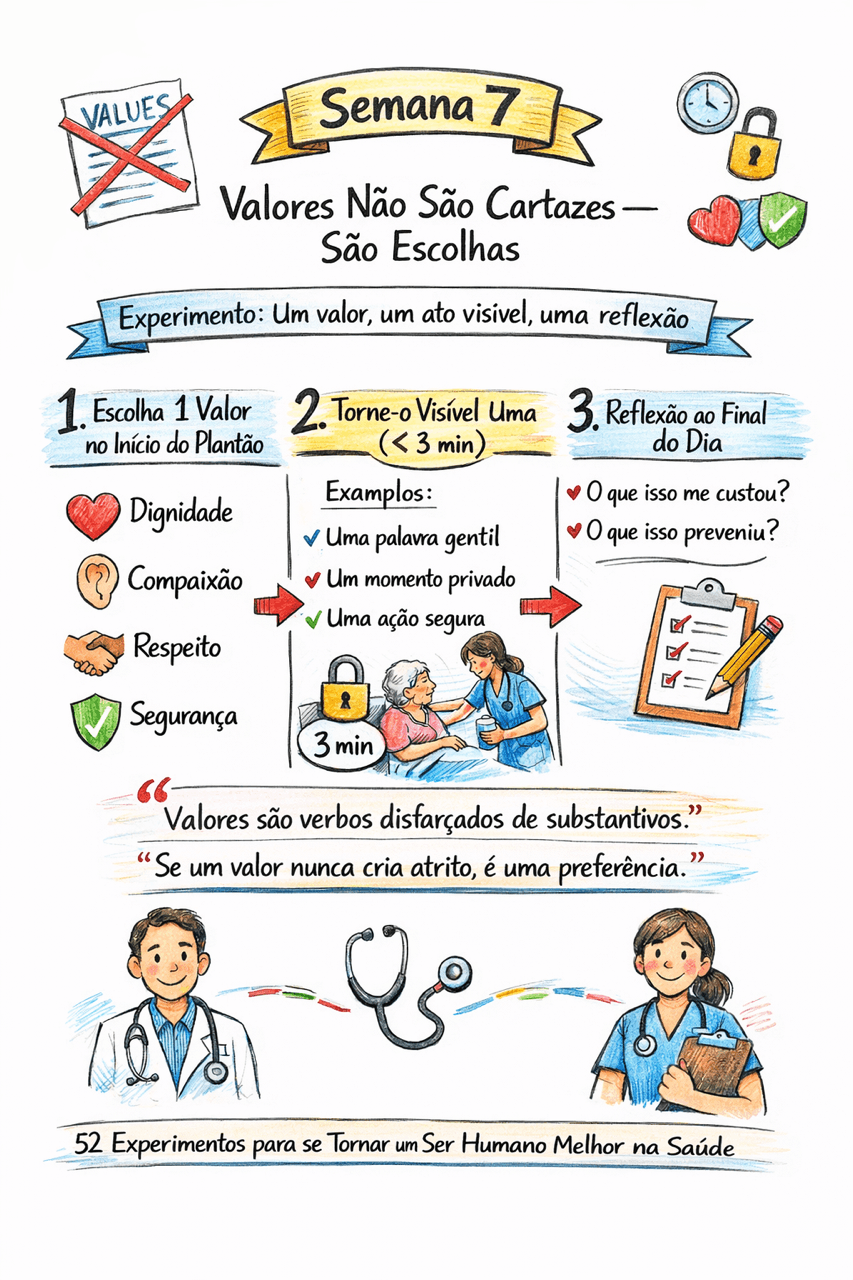
Para visualizar o pôster desta semana em português, clique aqui: Semana 7: Valores Não São Cartazes — São Escolhas
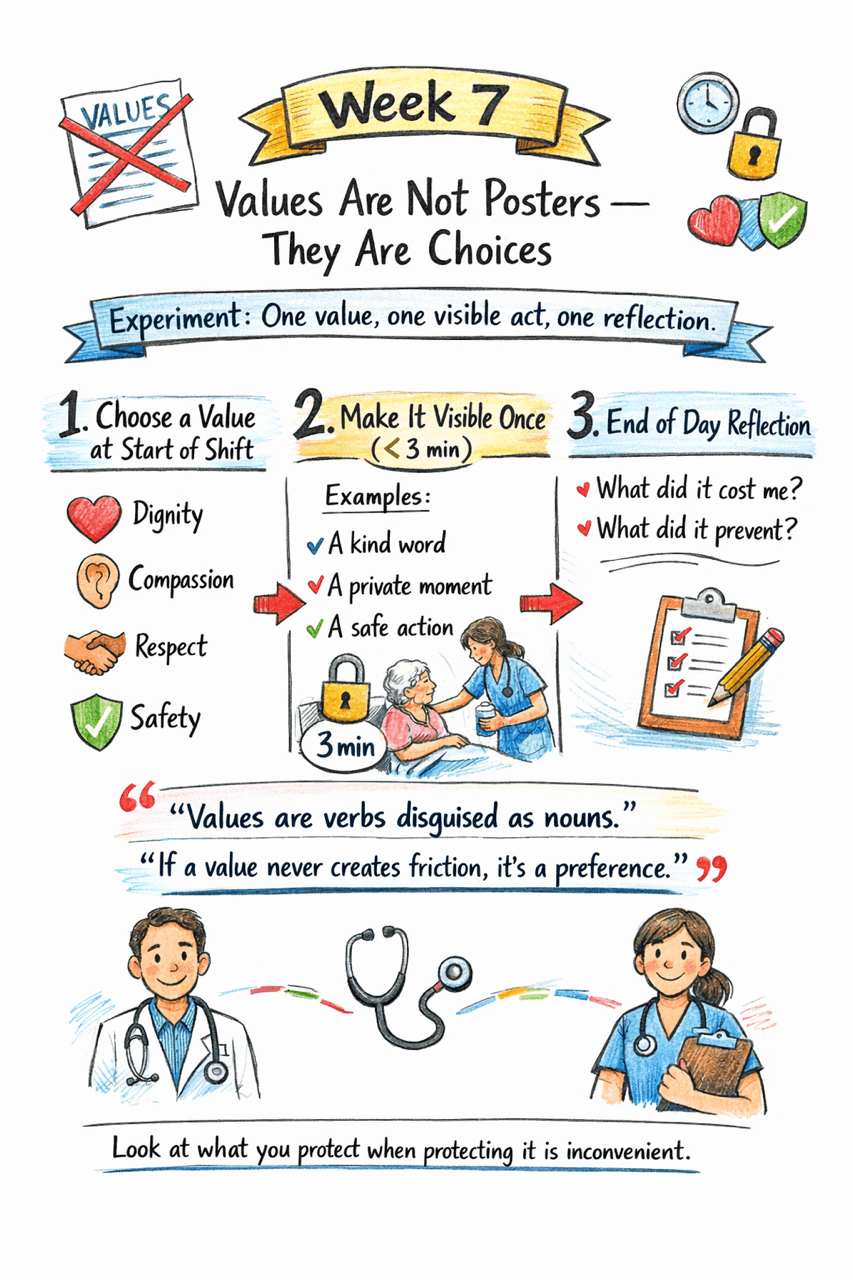 This week is about the transition from inspiration to action.
We often see "values" displayed on the walls of our workplaces—words like Dignity, Compassion, Respect, and Safety. However, values that remain on a poster are just decorations. To have real meaning, values must be treated as verbs rather than nouns. They are the active choices we make, especially when those choices create "friction" or require us to go against the grain of convenience.
In healthcare and leadership, we are often tested not when things are going well, but when the system is under pressure. It is easy to value "Compassion" when we have plenty of time; it is a true value only when we choose it while we are running late. As the experiment suggests, if a value never creates friction, it’s likely just a preference. True values have a cost, but they also serve as a shield—preventing burnout, moral injury, and the erosion of our professional identity.
Sustainable practice requires us to bridge the gap between what we say we care about and what we actually do. By choosing one value and making it visible through a single act, we reclaim our agency within the system.
One Value, One Visible Act, One Reflection
- To begin turning your values into lived choices, try this practice:
- Choose a Value: At the start of your shift or day, pick one core principle (e.g., Respect).
- Make it Visible: Find one small, concrete way to demonstrate that value in under 3 minutes. It might be a kind word to a colleague or a private moment of reassurance for a patient.
- End of Day Reflection: Ask yourself two questions: What did it cost me? and What did it prevent?
- The Check-in: Look at what you protect when protecting it is inconvenient. That is where your true values live.
Resumo em Português
Para os colegas que utilizam a versão em português, o cartaz intitulado "Valores Não São Cartazes — São Escolhas" foca na transformação da teoria em prática através de um experimento diário simples.
A mensagem principal é que os valores são "verbos disfarçados de substantivos". Se um valor nunca cria atrito ou exige um esforço extra, ele é apenas uma preferência. Este experimento faz parte da iniciativa "52 Experimentos para se Tornar um Ser Humano Melhor na Saúde", incentivando uma cultura de cuidado onde nossas escolhas diárias refletem nossa humanidade, mesmo quando o sistema torna isso difícil.
The audio of this segement of Dr Sarah On Call.
- Details
Boundaries — protecting what you’ve built from being given away
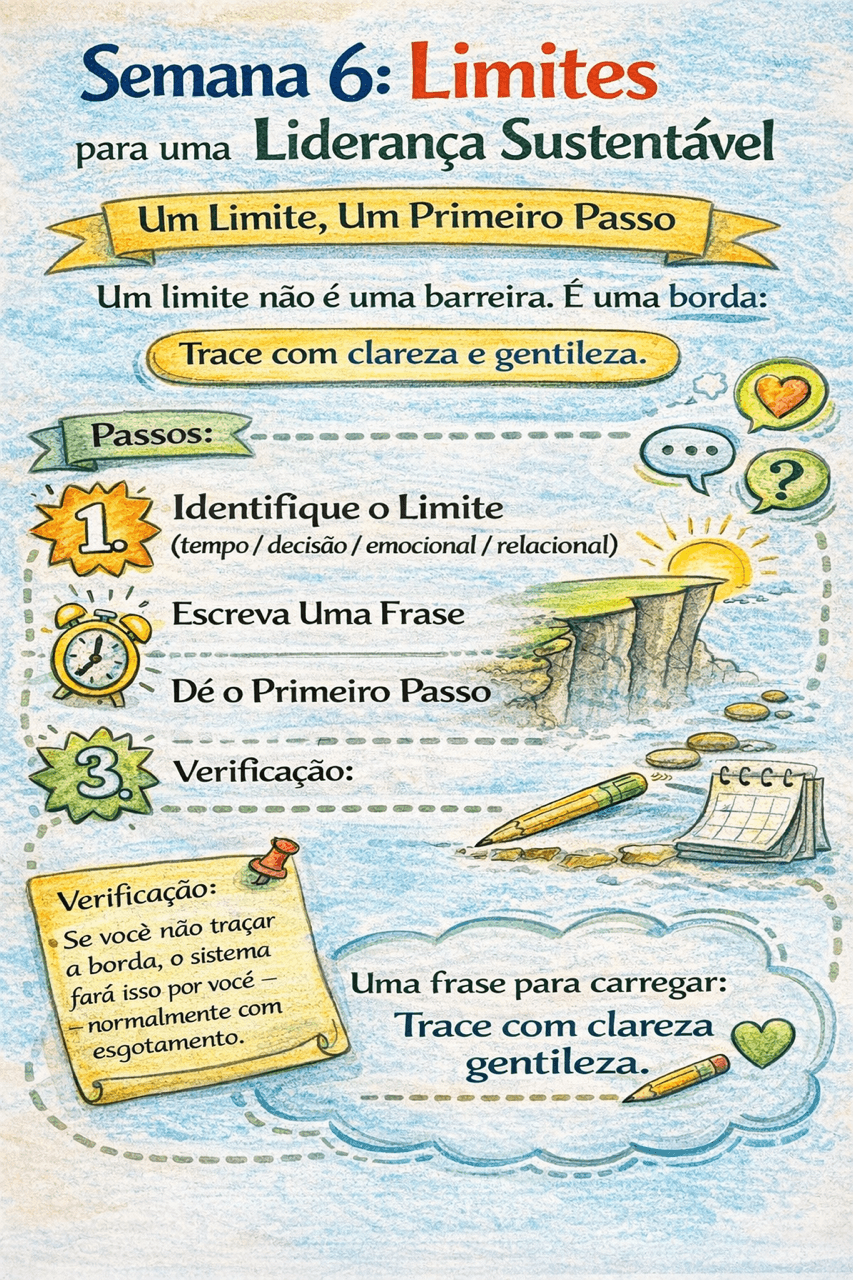
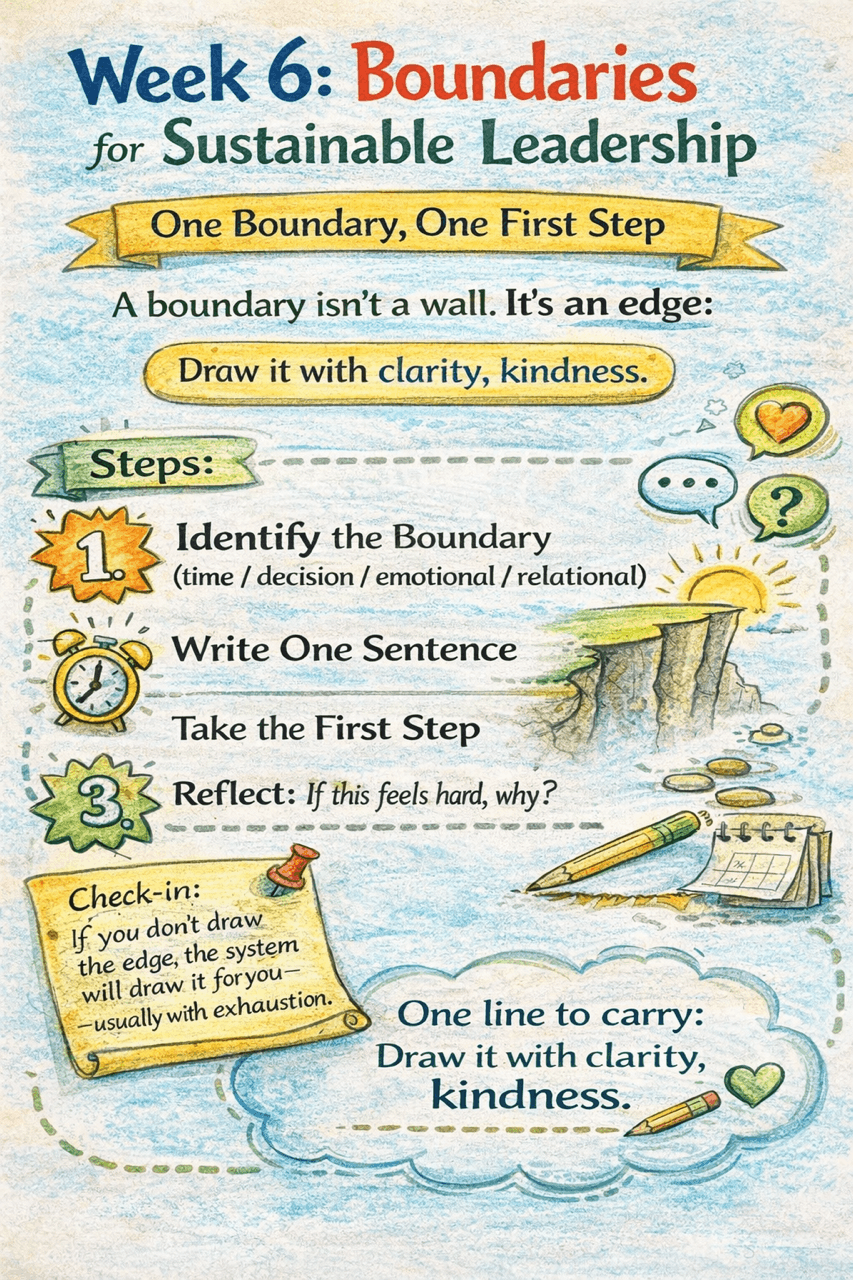
Para visualizar o pôster desta semana em português, clique aqui: Semana 6: Limites para uma Liderança Sustentável
 The “Always On” Mode
This week is about boundaries.
We can learn to read emotions, practice deep curiosity, and be fully present, but without boundaries, none of it holds. We often mistake boundaries for barriers, but they are actually edges. An edge is what stops us from drifting into a "yes" when we truly mean "no." It is the vital distinction between being genuinely kind and being merely compliant, or between helping someone and completely overextending ourselves.
We live in systems that quietly praise those who do "more"—more hours, more availability, more emotional labour. This praise often acts as a trap, turning our natural desire to contribute into a source of chronic guilt. These challenges shift throughout our lives; teenagers may struggle with the FOMO (fear of missing out), while older adults might find boundaries difficult when shifting independence challenges their identity. Ultimately, boundaries are not just about protecting ourselves; they are about respecting the edges of others too.
True sustainable leadership requires us to identify one boundary and practice holding that edge. It might be as simple as stopping emails after 9pm or finally saying what we actually mean. When we practice sentences like "I’m happy to help" or "I can’t be spoken to like that," we must pause and notice the internal reaction, whether it is relief, anxiety, strength, or guilt. Boundaries aren’t about becoming harder or more distant; they are about becoming clearer. Clarity, when held gently, changes everything.
One Boundary, One First Step
To begin drawing your edges with clarity and kindness, try this practice:
Identify the Boundary: Look at your week and pinpoint one specific area—whether it is related to your time, a decision, or an emotional or relational limit.
Write One Sentence: Clearly define this boundary in a single, simple sentence to give it shape and weight.
Take the First Step: Act on that sentence and hold the edge.
Reflect on the Difficulty: If holding this boundary feels hard, pause and ask yourself why that is.
The Check-in: Remind yourself that if you don't draw the edge, the system will eventually draw it for you—usually through the lens of exhaustion.
- Details
Presence and situational awareness — the human layer switched on
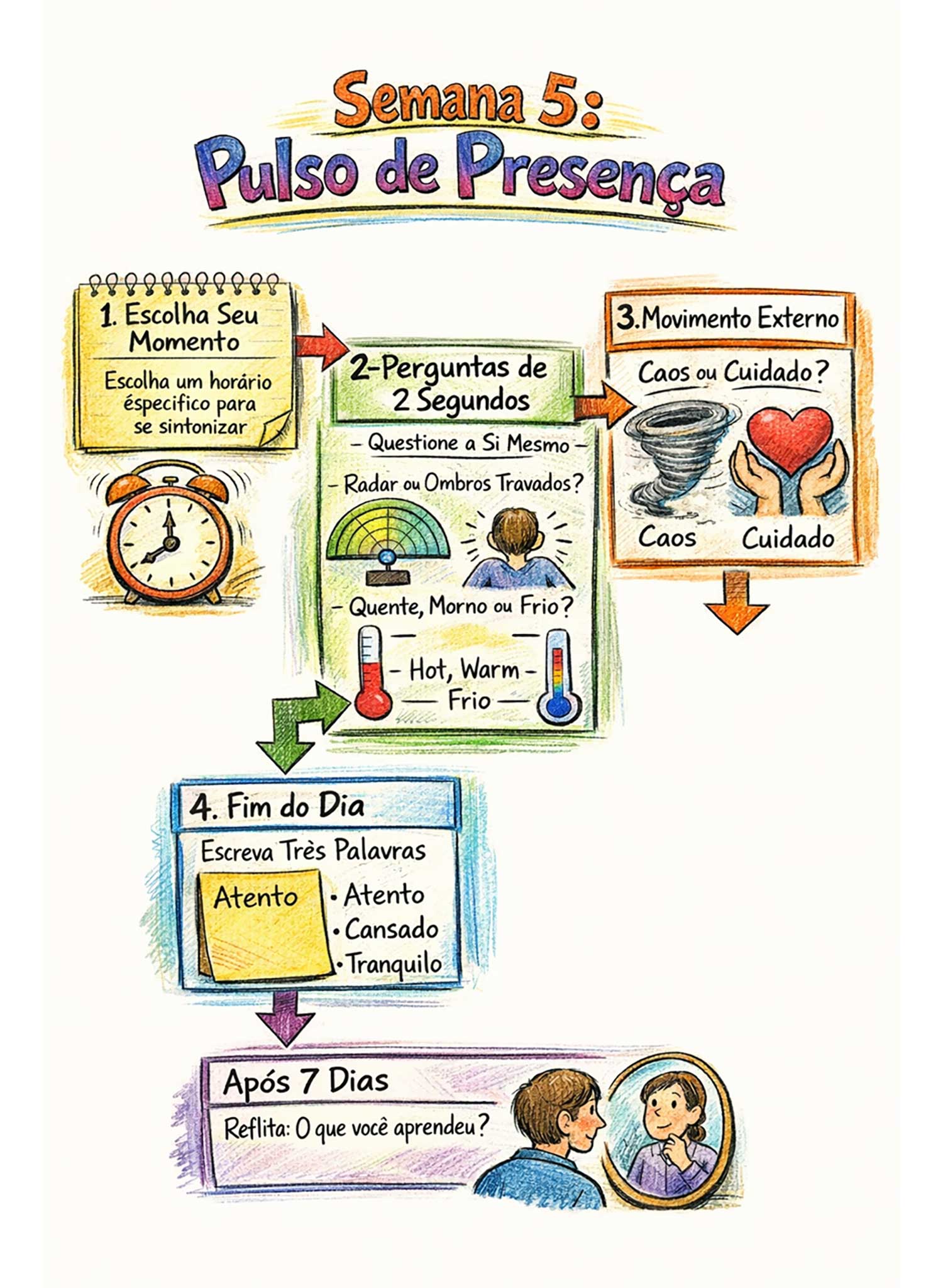
Para visualizar este guia em português, clique aqui: Semana 5: Pulso de Presença.Semana 5: Pulso de Presença.
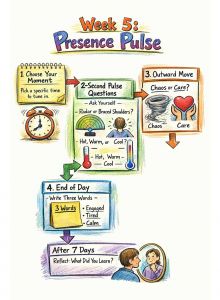
The “Always On” Mode
There is a state many of us live in without even realizing it. We aren't necessarily busy or overwhelmed, but we are "braced". It is a half-presence where we are constantly scanning for what might go wrong. While this feels responsible, prepared, and efficient, it comes at a significant cost. When we are braced, we don’t really notice reality; we misread situations, forget to pause, and shield ourselves from the present. Curiosity quietly disappears, and without that curiosity, our genuine connection to others fades too.
Chronic stress acts as a double-edged sword in this environment. It can make us effective, helping us move through tasks quickly, make rapid decisions, and keep the plates spinning. However, that same speed reduces our sensitivity and reflection. We lose the space to truly consider our actions. We become efficient, but we are no longer present. Presence isn’t about slowing life down; it’s about stepping fully into it, and often, that can start with a single pulse of noticing.
The Present Pulse: A Small Practice
To reclaim your awareness, choose one moment you experience every day—like the school run, making a cup of tea, or walking into work. In that moment, try this practice:
One Pause: Stop and ask yourself: Am I in scan or brace?
Check Your Reality: Ask what is actually going on here and whether you need more clarity or more contact.
Assess the Energy: Notice if you feel Hot, Warm, or Cool, and if the environment feels like Chaos or Care.
Give and Notice: Ask what you can give in this moment, then choose three words to describe your state—such as Engaged, Tired, or Calm.
No Judging: Just notice with awareness; there is no need to fix or judge.
Finally, choose three words to describe your state.
- Details
Curiosity as the antidote to judgment
Curiosidade da semana 4: clique aqui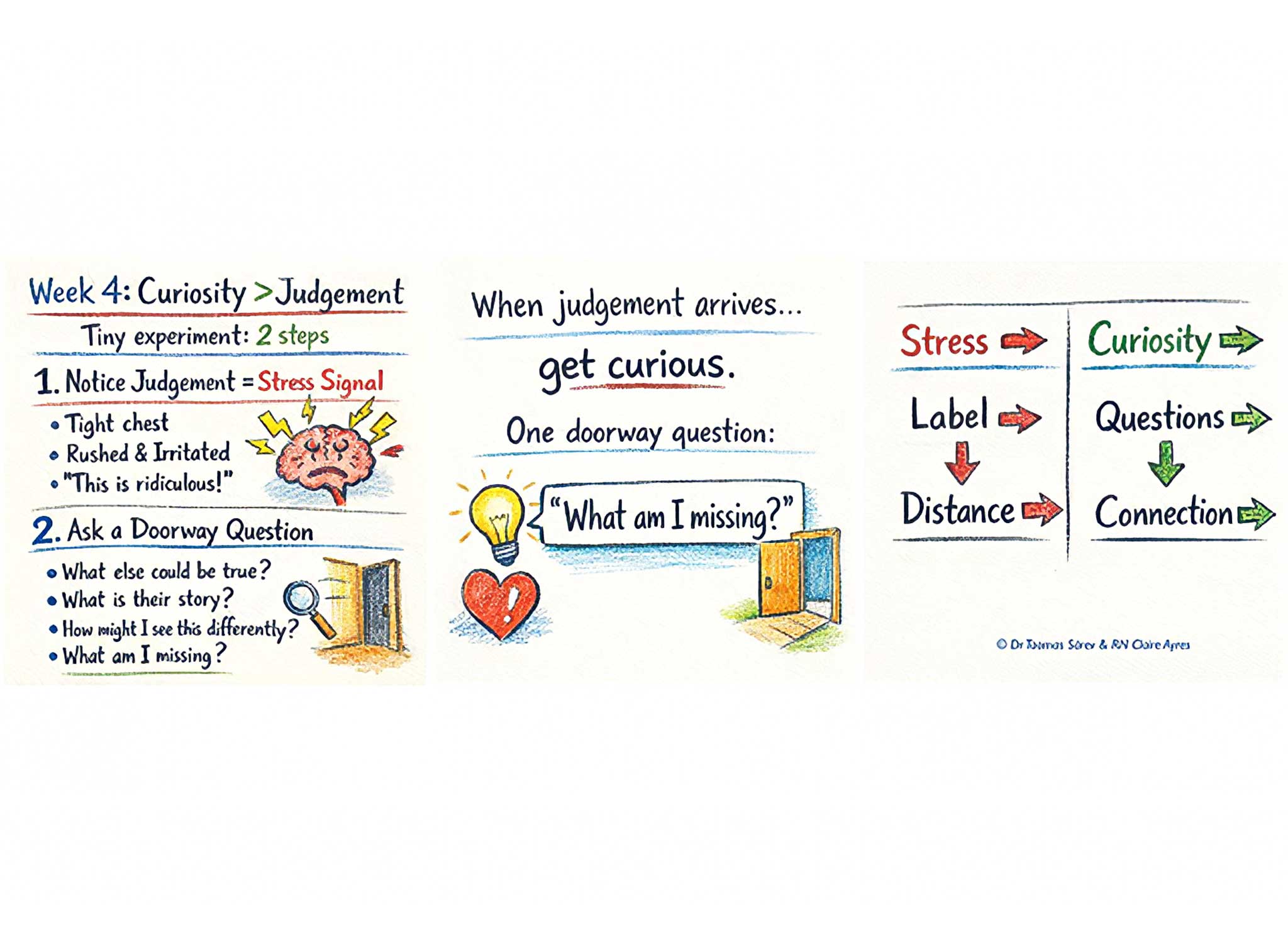 Our brains like to make things easy. When life feels busy, stressful, or overwhelming (too many plates spinning), concentration drops and we start jumping to conclusions. This isn’t a flaw — it’s how our brains cope.
Over time, repeated thoughts and emotional responses create familiar pathways, like ruts in a well-travelled road. Without realising it, we can get stuck in these patterns. We may not be able to name it — we just know something isn’t working.
This is where curiosity helps.
Instead of asking “Why?” (which often brings judgement and defensiveness), try asking “What?”
-
What am I noticing right now?
-
What might I be missing?
-
What’s really going on for me?
“What” questions open space. They slow our automatic reactions and help us step out of old ruts. You don’t need to fix everything — just start noticing.
Get curious. Awareness is often the first step towards change.
- Details
Emotional intelligence — feelings as information, not noise
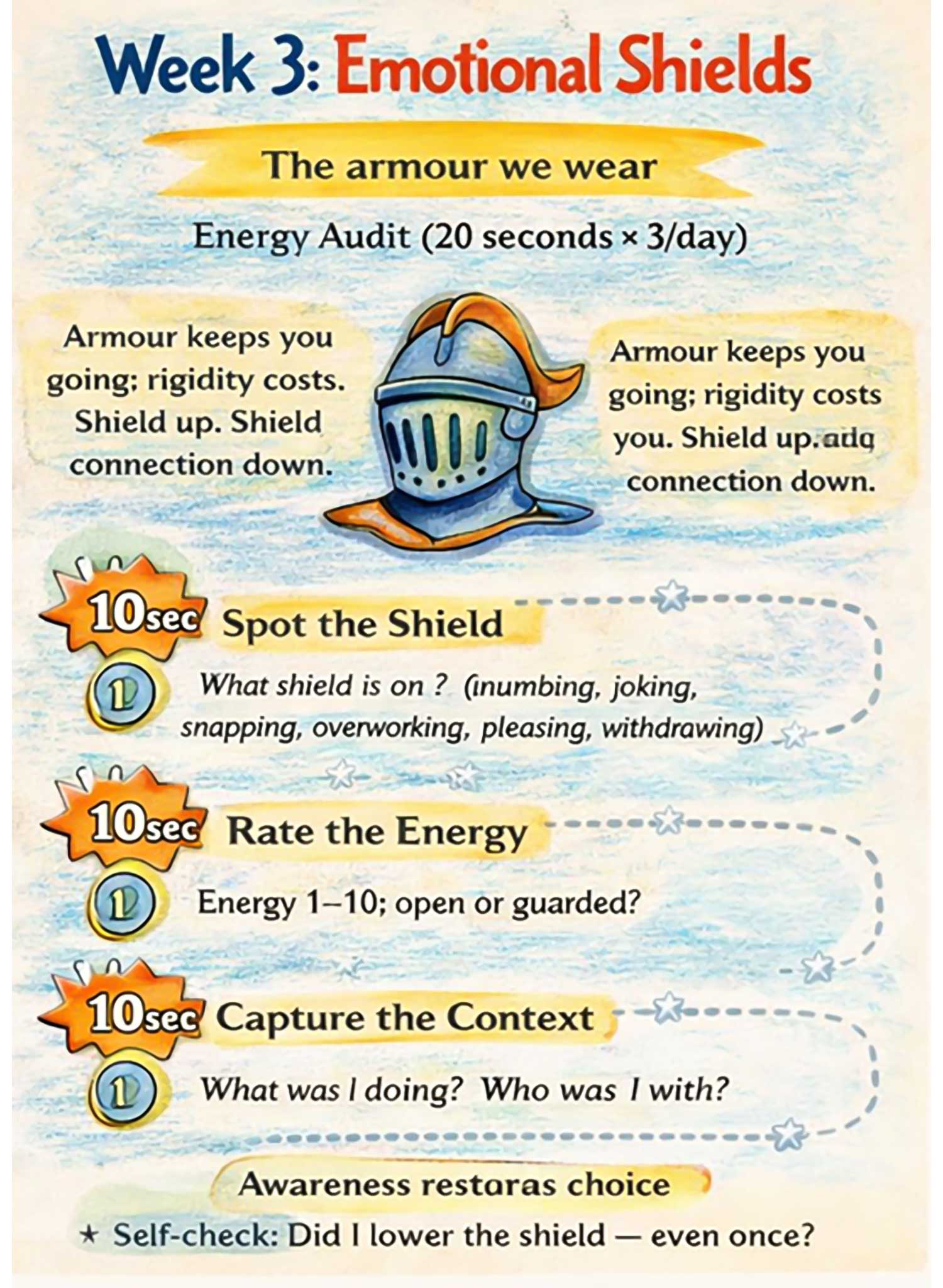
To navigate life and protect ourselves, we often learn—sometimes without realizing it—to hold in our emotions, to hide what we truly feel. Like a gambler carefully guarding their next move, we build a kind of armour: a protective shell that shields us from hurt and helps maintain our self-esteem.
This is normal. It is part of how we cope.
But when this armour becomes constant, always on, it can start to distance us from ourselves. Our reactions may no longer reflect what we truly want or feel. We may find that the person behind the armour feels hidden, even from ourselves.
One way to understand this armour is to notice our triggers. When do we feel the need to put it on? When do we hold our emotions tightly inside? Which people, places, or situations fill us with energy, joy, and connection—and which leave us feeling drained, guarded, or closed off?
By observing these moments, we begin to see not only the armour we wear but also the freedom to choose when, and with whom, we truly lower it. In doing so, we reconnect with ourselves—and with the life that gives us energy and joy.
Dr Sarah on Call MH week 3 and January Blues 27.1.26
- Details
Emotional intelligence — feelings as information, not noise
Haz clic aquí para ver el póster en español
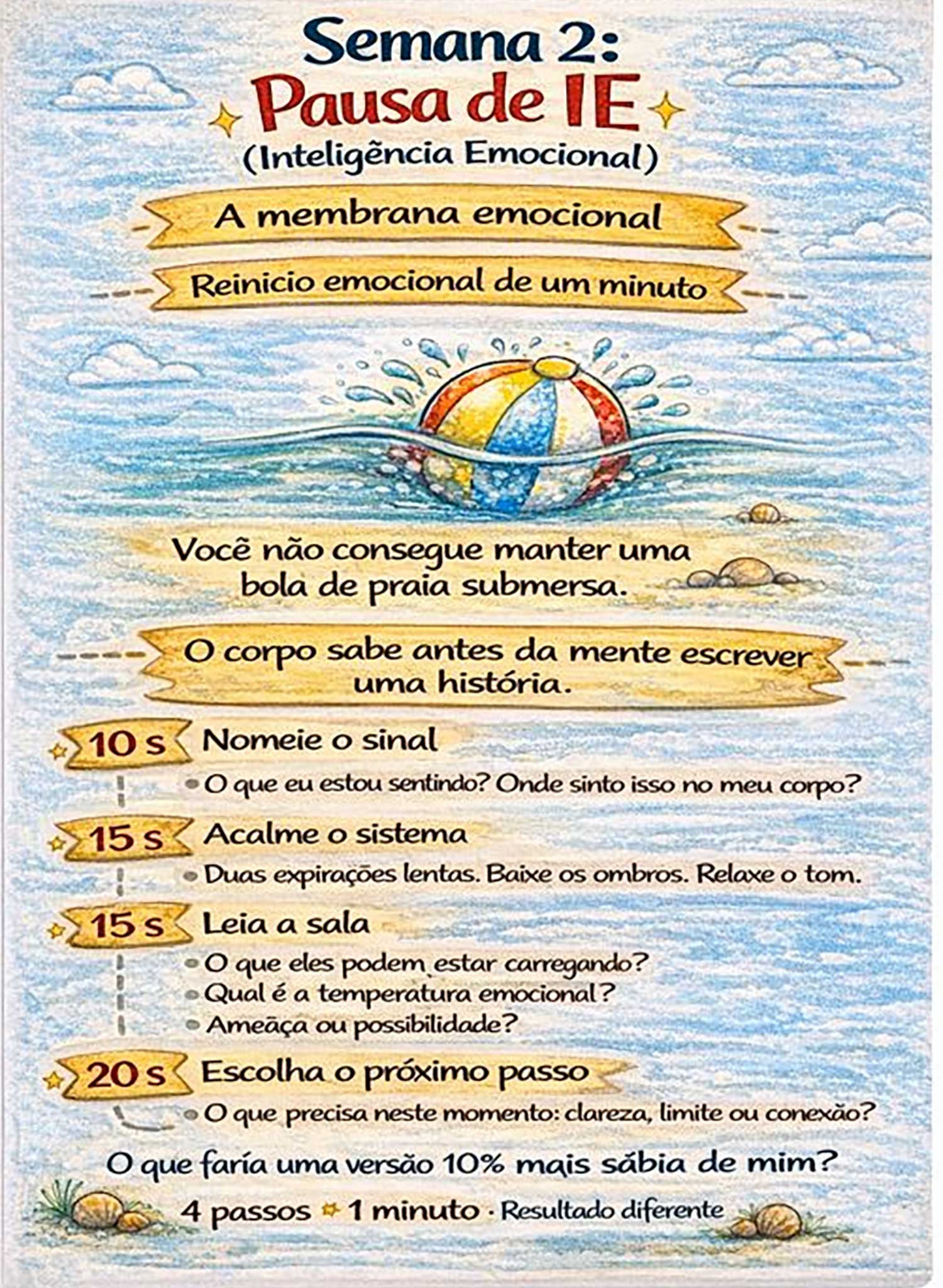
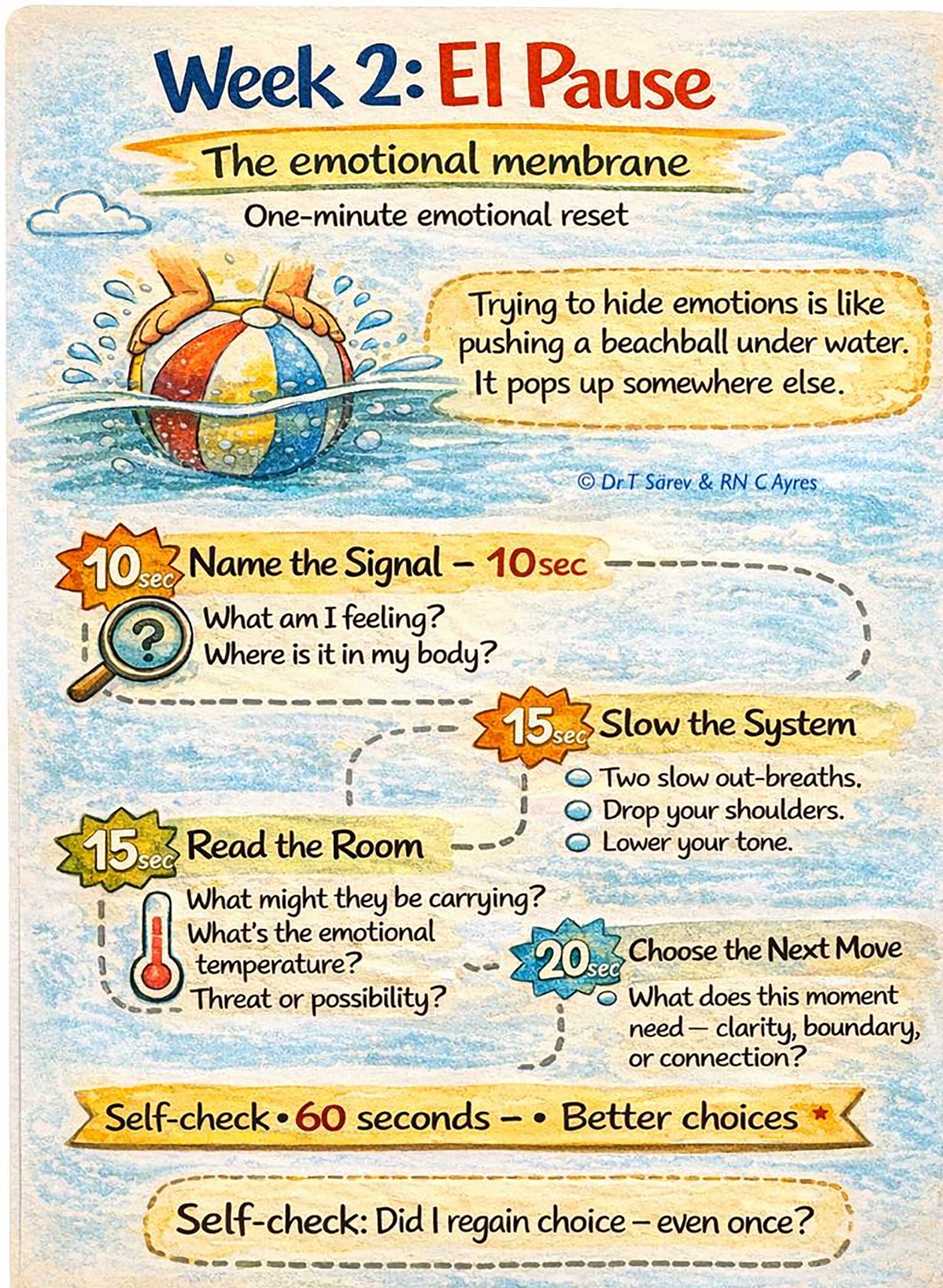
The focus this week is ’The Pause ‘— learning to pause before reacting.
Notice where stress or anxiety shows up in your body? Is it your chest, shortness of breath, a sensation in the pit of your stomach like the downwards twist in a rollercoaster, or maybe a headache?
Pause
Take a breath
Look around you
The choose how you respond
This small moment of awareness can create space, calm, and choice- even in the middle of a busy or pressured day
Dr Sarah on Call: Step 2 Mental Health, Viral or Bacterial Infection - how can you tell?
- Details
Self-mastery — creating a centre before the day grabs you
Clique aqui para o Rastreador de Hábitos Matinais da Semana 1 (Sua Bússola Matinal)
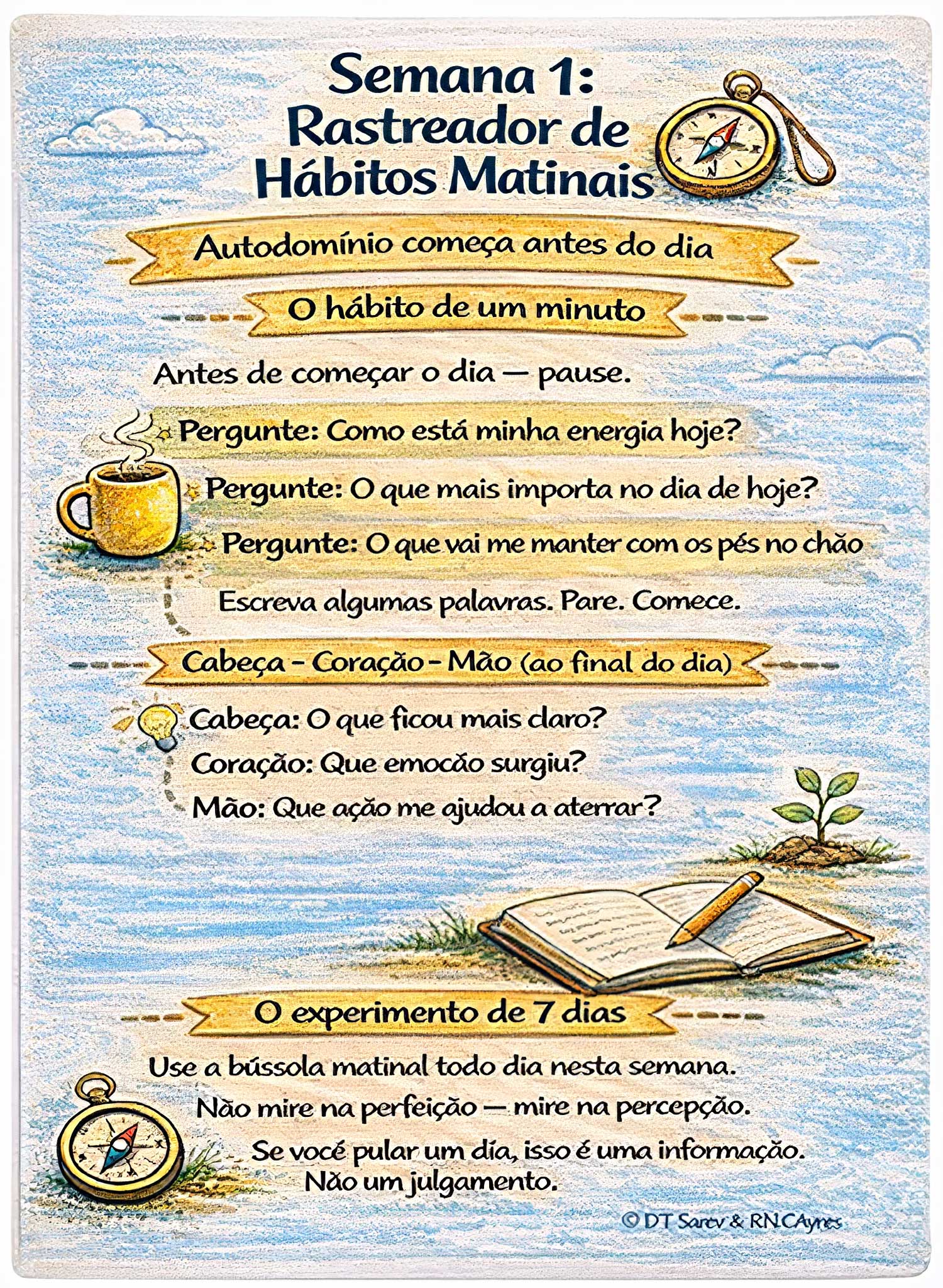
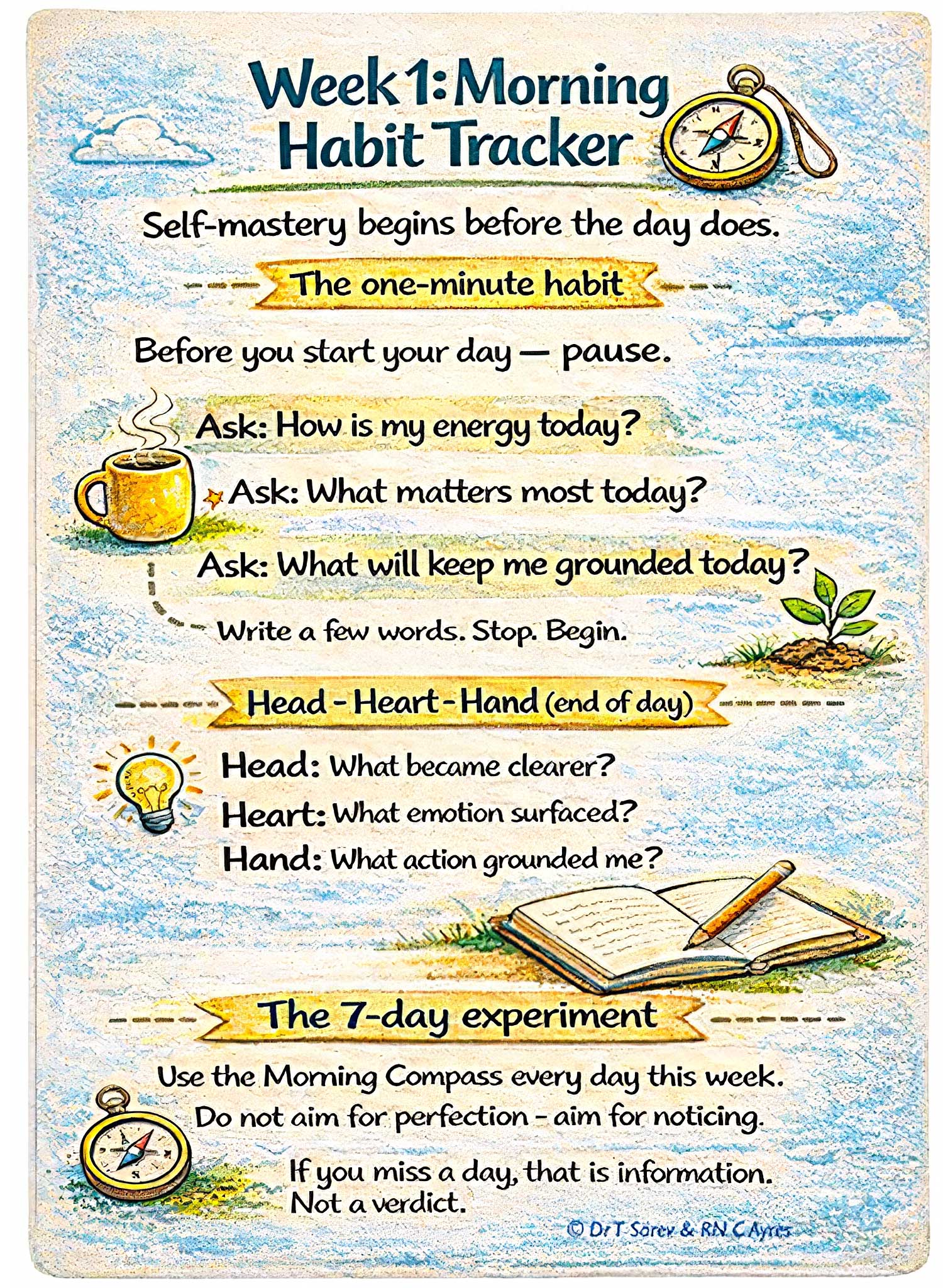
We begin the first 52 two-minute experiments designed to build resilience — small, intentional practices that fit into real life.
At the beginning of each day take a moment to notice where your tank is: full, half -full or running into empty.
From there identify just one thing you want to achieve that day, which is the thing / behaviour that will make the most difference to you. Why does this matter. Head (thoughts), heart (feelings) and hand (actions).
Anticipation and stress can quietly shape our days before they even begin.
If you expect a difficult day does that affect your sleep?
Does poor sleep make the day harder creating a self-fulfilling cycle
As we move through the course. Does understanding energy levels, choosing manageable goals, improve sense of achievement and drive increasing confidence.
Give it a try;
Head (thoughts), heart (feelings) and hand (actions)Try this
- How is my energy today (it is JUST information at this stage)
- What matters most for me today.
- What will keep me remain grounded … where is my help, my brakes … is it stop taking on board more, ask for help?
Dr Sarah on Call with Geoffrey Smart : A Few Thoughts on Humanity
- Details