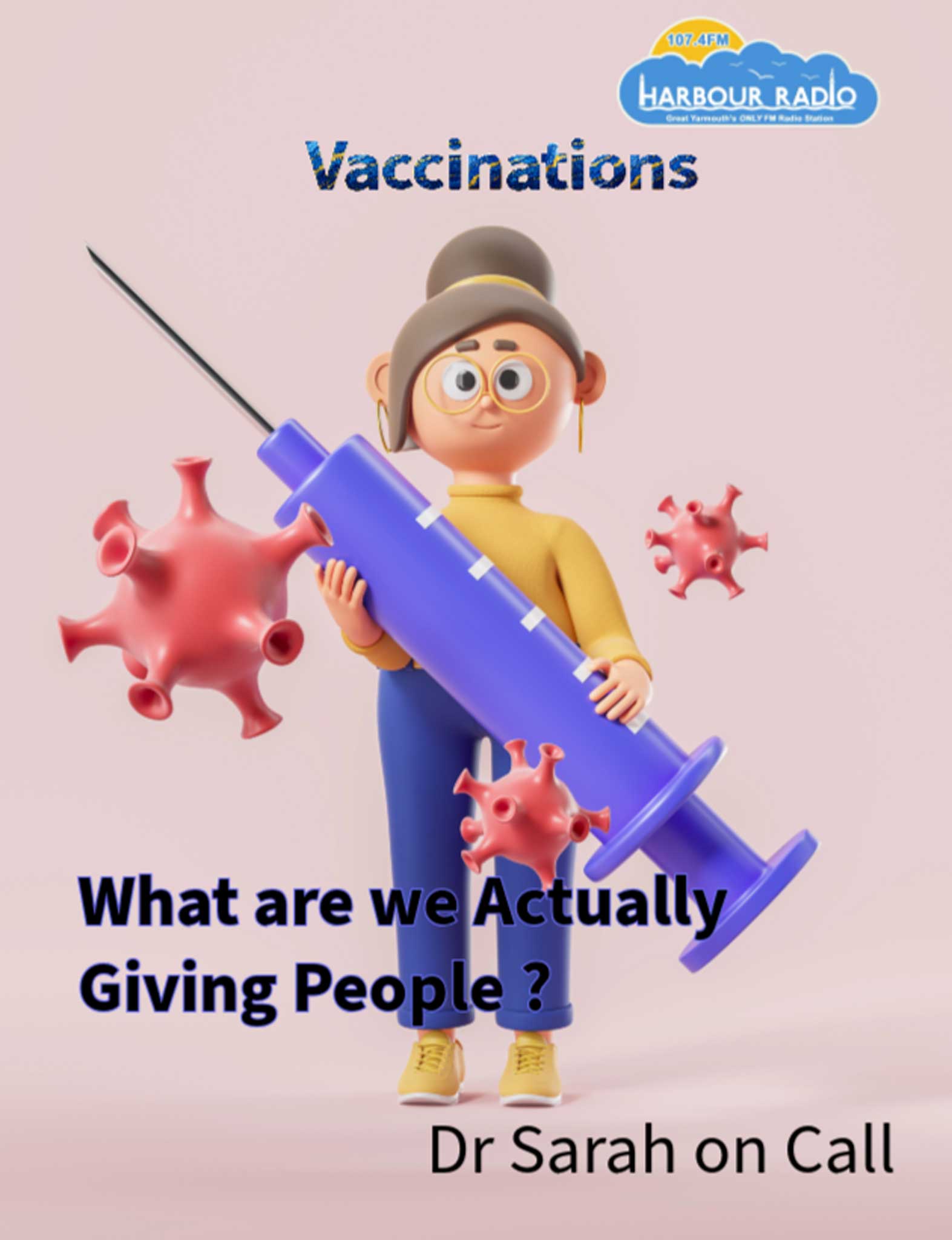
What Are We Actually Giving People?
Vaccines are one of the most successful public health interventions in human history — but many people don’t actually know what’s in them, what diseases they prevent, or why we give so many across life.
 In the UK, vaccines begin in infancy and continue through childhood, pregnancy, adulthood and older age. Some protect against fast-moving infections like meningitis or measles. Others prevent long-term complications such as liver cancer from hepatitis B or cervical cancer from HPV.
The childhood “6-in-1” vaccine protects against six serious diseases:
- diphtheria, which can block the airway and damage the heart,
- tetanus, causing severe muscle spasms and lockjaw,
- whooping cough, which can stop babies breathing,
- polio, which can cause paralysis,
- Hib, a major cause of meningitis and airway infection,
- and hepatitis B, a virus linked to cirrhosis and liver cancer.
Other vaccines protect against meningitis, pneumonia, rotavirus diarrhoea, flu, shingles, RSV and COVID-19.
One concern people often raise is whether giving multiple vaccines at once overwhelms the immune system. In reality, the immune system is exposed to thousands of antigens every day through breathing, eating and normal life. Modern vaccines actually contain far fewer antigens than older vaccines did decades ago. The immune system is designed to recognise many different threats at the same time.
Vaccines can cause side effects — and it’s important to be honest about that. The common ones are mild:
- sore arm,
- fever,
- tiredness,
- muscle aches.
Rarely, more serious reactions can occur, such as severe allergy or specific immune complications, but these are extremely uncommon and are monitored carefully.
What’s often forgotten is that the infections themselves usually carry much greater risks. Measles can cause encephalitis. Flu can lead to pneumonia. COVID-19 can cause clotting and long-term complications. Vaccination is essentially a controlled training exercise for the immune system rather than exposure to the full disease.
Perhaps the most important shift in modern vaccination is that we are no longer only preventing childhood death — we are now preventing disability, frailty and even cancer across the whole of life.