
Our eyes are extraordinary
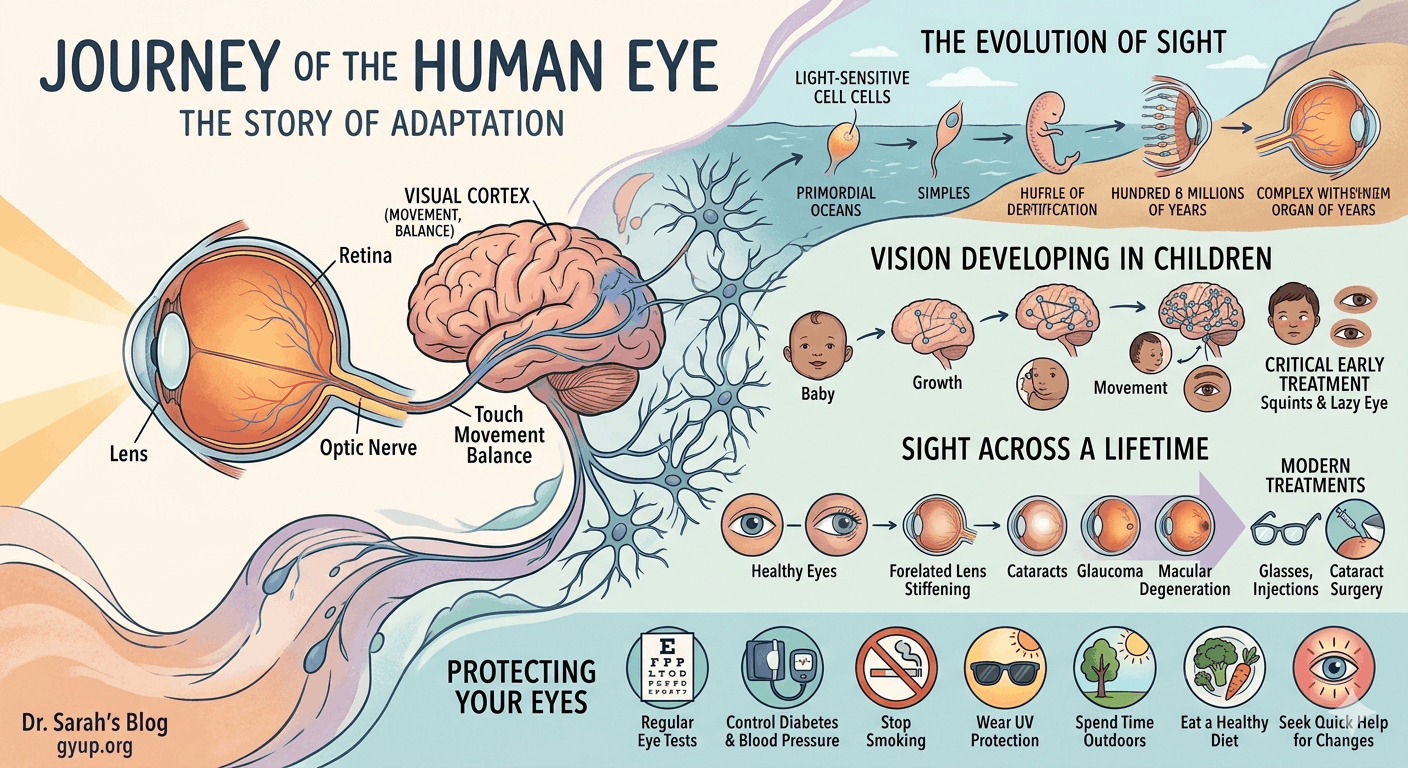 They began as simple light-sensitive cells hundreds of millions of years ago and gradually evolved into one of the most complex organs in the human body. The eye is not just a camera — it is actually an extension of the brain, constantly sending electrical signals that the brain turns into the world we experience. Visual input is constantly integrated with touch, movement, and balance. Close your eyes for a moment, or minute or an hour and all your senses will miss their amazing impact!
Children are not born with fully developed vision. Babies learn to see over time as the brain builds connections through experience, movement, faces, and interaction. That is why early eye problems such as squints, lazy eye, or severe short-sightedness are so important to detect early — because the visual brain is still developing and can often be helped remarkably well with treatment.
As we get older, the eyes change too. Many people develop reading difficulties as the lens stiffens, while conditions such as cataracts, glaucoma, macular degeneration become more common. The good news is that modern treatments — including glasses, injections, and cataract surgery — can preserve or dramatically improve sight for many people.
There is also a lot we can do to protect our eyes:
- regular eye tests
- controlling diabetes and blood pressure
- stopping smoking
- wearing UV protection
- spending time outdoors
- eating a healthy diet
- seeking help quickly if vision suddenly changes
The story of the eye is really the story of adaptation — how biology, the brain, and human experience work together across an entire lifetime.