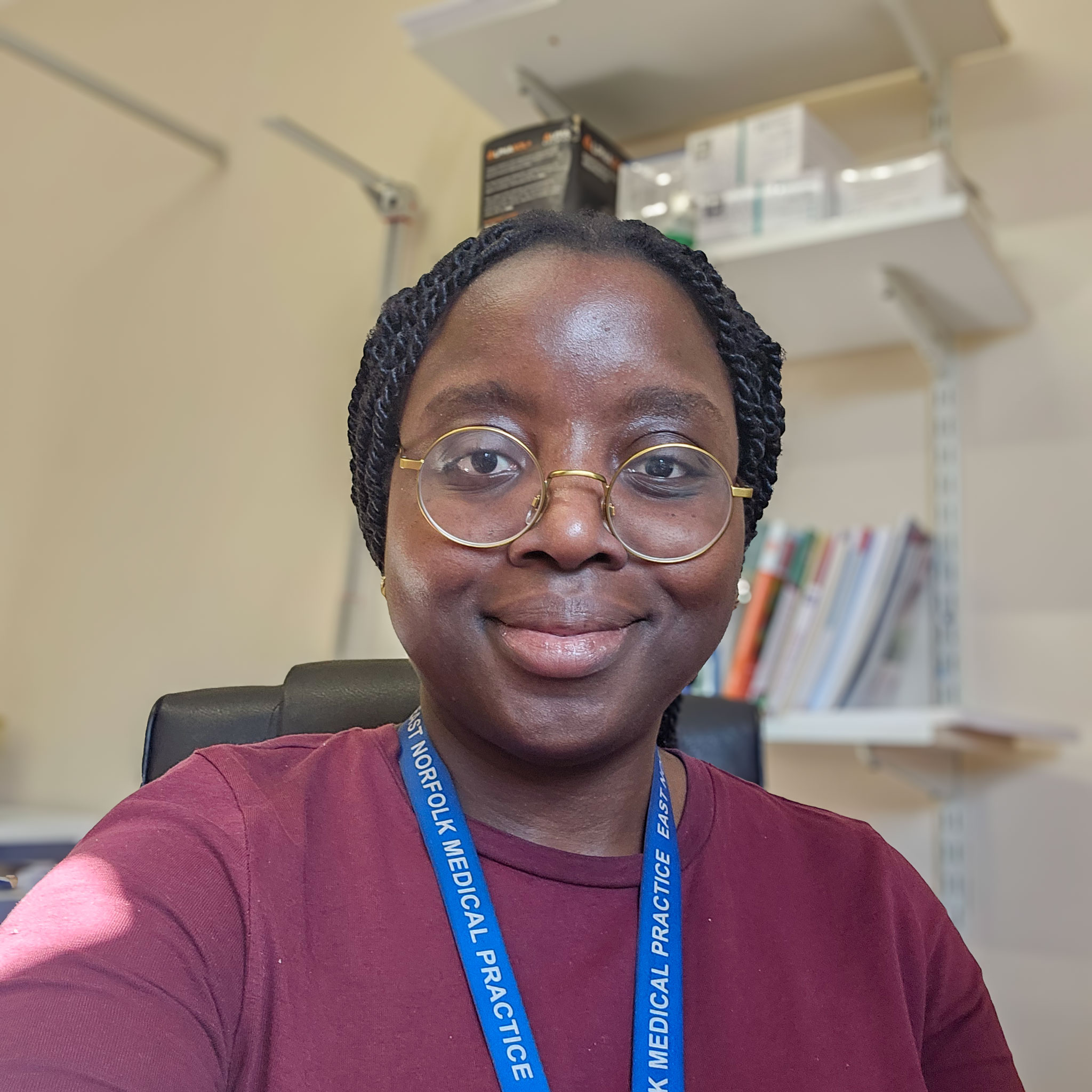
 Dr. Oyewo is a Specialist GP Trainee with East Norfolk Medical Practice and writes about her expericence with the GYUP cancer screening programme.
When I began participating in the cancer awareness and training sessions, my focus was naturally on the clinical framework, understanding how cancer champions are trained and how communities are encouraged to engage with their own healthcare.
However, my experience quickly evolved into something far more purposeful. By stepping outside the consulting room and into community spaces, I discovered that the real barriers to cancer screening are rarely just logical but can be rooted in mistrust, fear, and a disconnect between healthcare systems and the people they are designed to serve. This project helps tackle those barieers by bringing meanings to textbook screening programmes and into the heart of the community she serves.
An eureka moment was in the preparation that preceded one of the sessions. Dr Flindall who is the lead GP had held several preparatory meetings to carefully consider how conversations around cancer screening would translate to people experiencing homelessness — a group whose needs are so often overlooked and understated. Where previous sessions had relied on larger, more centralised presentations, this one was deliberately reimagined around smaller groups, pictorial aids, and a facilitated approach that prioritised the individual over the message. Patient centered.
I facilitated a group of just four people and delivery, and assimilation was notably different. People discussed why they had previously missed screening appointments and the groups felt small enough that they could share. By the session's end, there was a visible change in understanding, and in motivation. One participant shared their own experience of being recalled for cervical screening and later being cleared — a moment that resonated deeply with the group than my logical explanations as to why screening is important. Hearing a relatable story from someone in the room transformed the information into something real, relatable, and worth acting on.
Reflecting on these sessions, they have really brought home the community aspect of the National Health Service and why this is something to be cherished. Bringing clinicans close to the heart of the community in a way best suited for the community. I understand better that sustainable healthcare depends on meeting people where they are. Learning must be tailored to individual needs, participation must be actively encouraged, and teaching, like medicine itself, must continuously adapt.
I continue to have a growing passion for community-led health education, a deepened awareness of health inequalities, and the voices of the people I have met on this journey continues to be woven into the fabric of my journey into being a GP.