
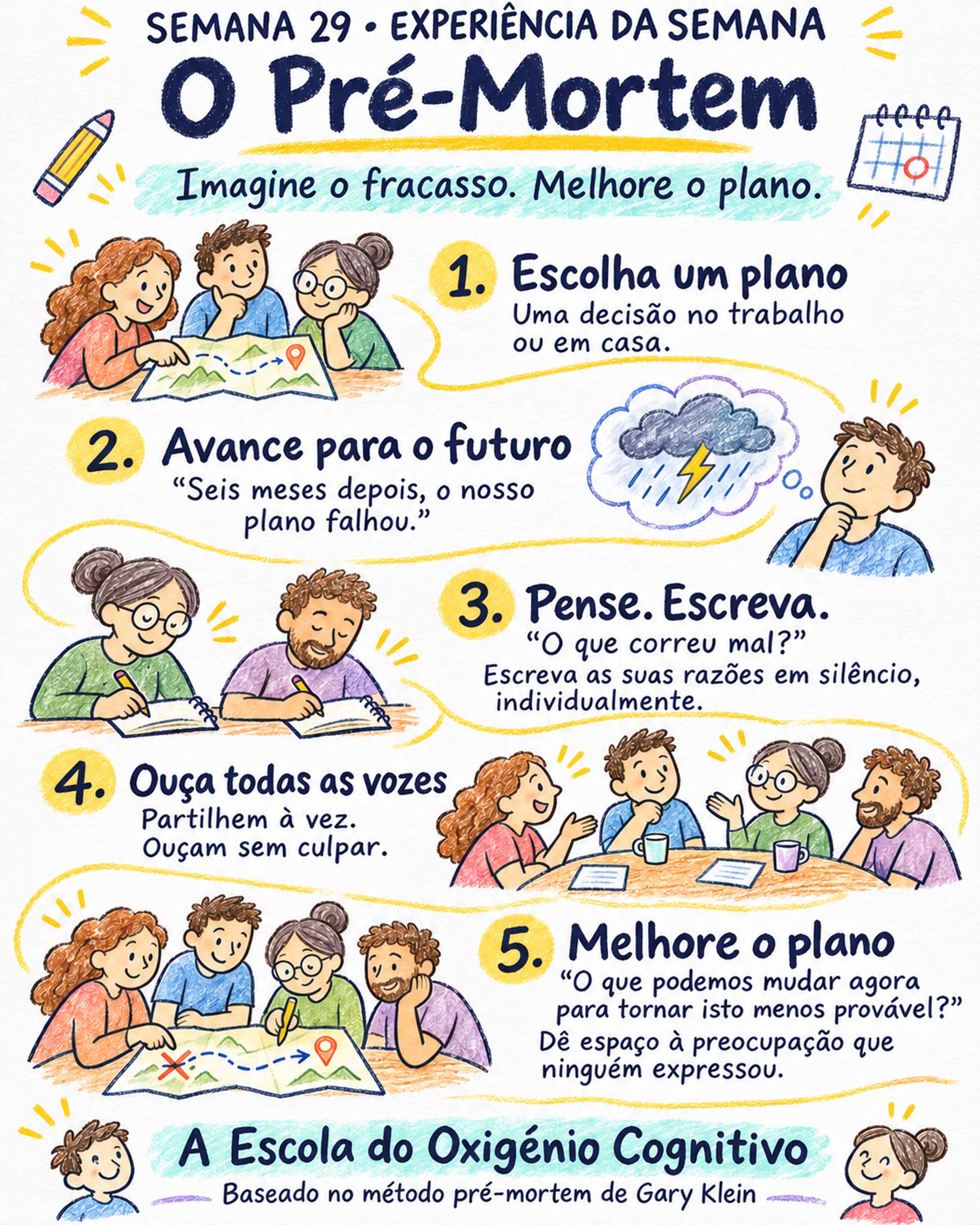
A versão em português do cartaz desta semana está disponível aqui.
 Dr Sarah Flindall and Dr Toomas Särev test team culture from a different direction this week: disagreement. Toomas argues that the opposite of collaboration isn’t conflict but suppressed disagreement, and that a quiet room is not necessarily a healthy one. He describes a hospital merger in Stockholm where meetings were full of experienced people nodding along. The real meeting happened afterwards, in the corridor and the lift. Healthy organisations slowly turn those two meetings into one. When leaders ask for views but want endorsement, what looks like alignment is really delayed disagreement. Constructive friction, such as the nurse who says “this works in the policy but will fail at three in the morning”, is not disloyalty but stewardship: crash-testing an idea before reality does.
Toomas’s co-author Claire describes two hospitals moving acute care onto one site. Everyone was on their best behaviour for three months, until what she calls “the explosion of peace”. The peace had been suppression all along, and suppression has a carrying capacity. When the channels finally opened, the colleague who had seemed obstructive turned out to be frightened. Repair has a clock: rush it and you get politeness, leave it too long and you get rot. At home, a family that never argues may simply be one where disagreement has become too costly. Teenagers need proof that they can disagree and the relationship will still hold, even when the boundary stays. With older parents, care can quietly become control, and asking “I know you don’t agree; can we talk about what it is costing you?” protects their dignity.
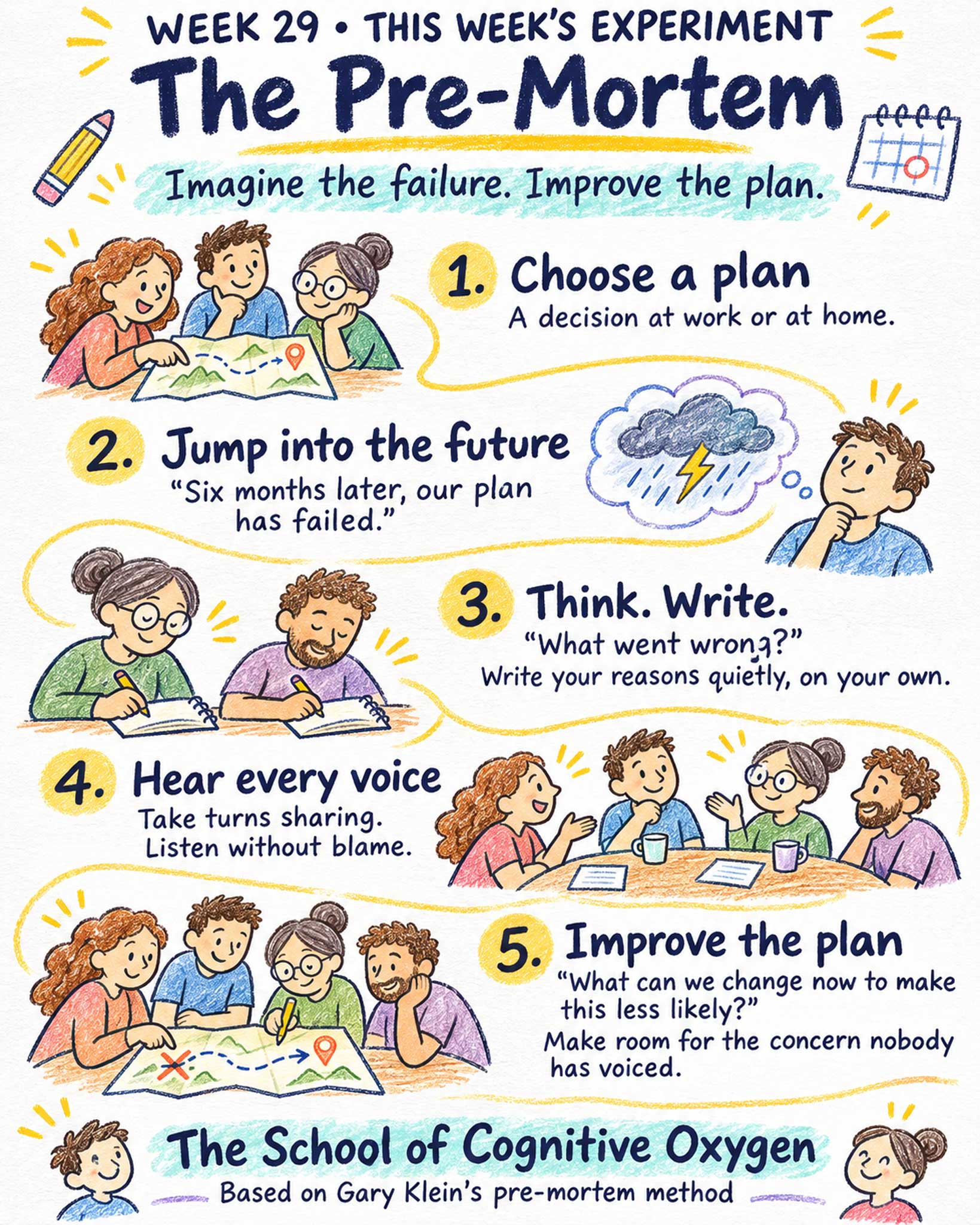
This week’s experiment: “The Pre-Mortem”, from cognitive psychologist Gary Klein. Take one plan or decision at work or at home and imagine it is six months later and the plan has failed. Each person quietly writes down what went wrong, on their own, before anyone shares. Then take turns, listen without blame, and ask: “What can we change now to make this less likely?”
This is not a licence for the loudest voice. The challenge stays aimed at the idea, never at the person’s dignity, and quieter voices come first, which is why the pre-mortem starts in silence. If disagreement always comes from the same three people, that’s just another kind of choreography. Candour without care is brutality, and care without candour is avoidance. Every system pays for disagreement; the only choice is whether it pays during the conversation or after the consequences arrive.
Listen to the full episode below.