
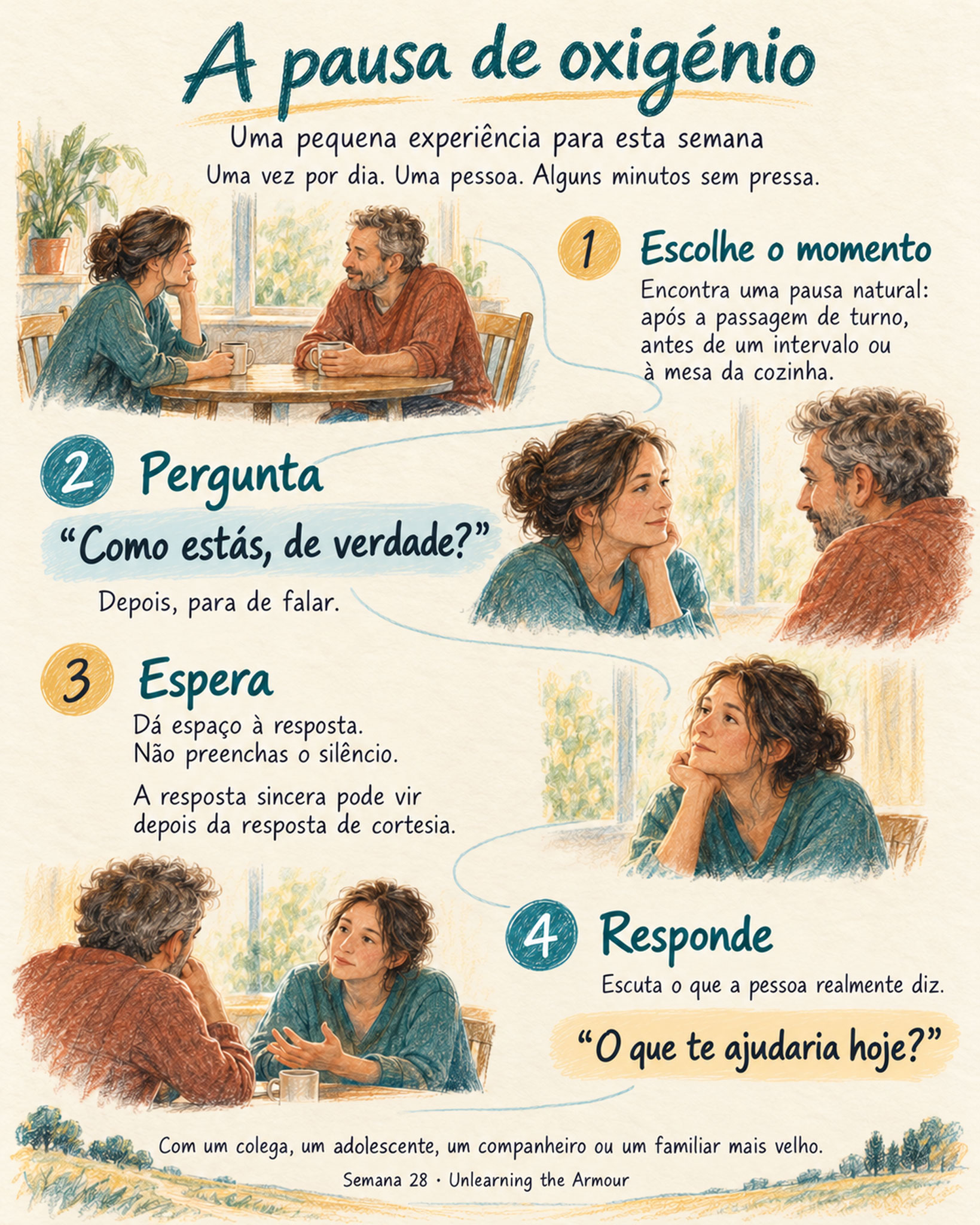
A versão em português do cartaz desta semana está disponível aqui.
 As the series moves into its third quarter, about the systems and conditions people work in, Dr Sarah Flindall and Dr Toomas Särev ask what actually makes a culture supportive. Every organisation claims it on a poster, but Toomas says the gap shows up on a Tuesday afternoon, when the list is overrunning, a colleague has gone quiet and a junior’s smile has gone fixed. Culture is revealed in what becomes possible when things are hard. Can someone ask for help without losing status, or say “I’m not okay today” without being labelled fragile? Values are the claim and culture is the evidence, and when the two diverge, behaviour wins. Toomas treats behaviour as a symptom. Rather than asking who the problem is, ask what conditions make that behaviour rational: workload, safety, incentives, and what leaders quietly tolerate. That doesn’t excuse harm, but it changes the fix. A value only becomes culture when a leader pays a visible price to uphold it. Sarah calls this “the permission in the air”, and Toomas calls it the social soil, grown slowly through small choices nobody sees.
Leaders who perform certainty teach their teams to do the same, and half-formed doubts, which are often where safety begins, go unsaid. A consultant who admits “I found that decision difficult” isn’t weakening the room but calibrating it. Claire, Toomas’s co-author, describes two nurses staying late with a frightened patient with a learning disability, risking the last shuttle bus home, with nobody saying “this isn’t my job”. She calls it the informal infrastructure of a breathable team. The off day matters too: a healthy team can hold one. The same permission applies to the teenager who tests the room before telling the truth, the partner who says “I’m fine”, and the older person whose stoicism may be loneliness in disguise.
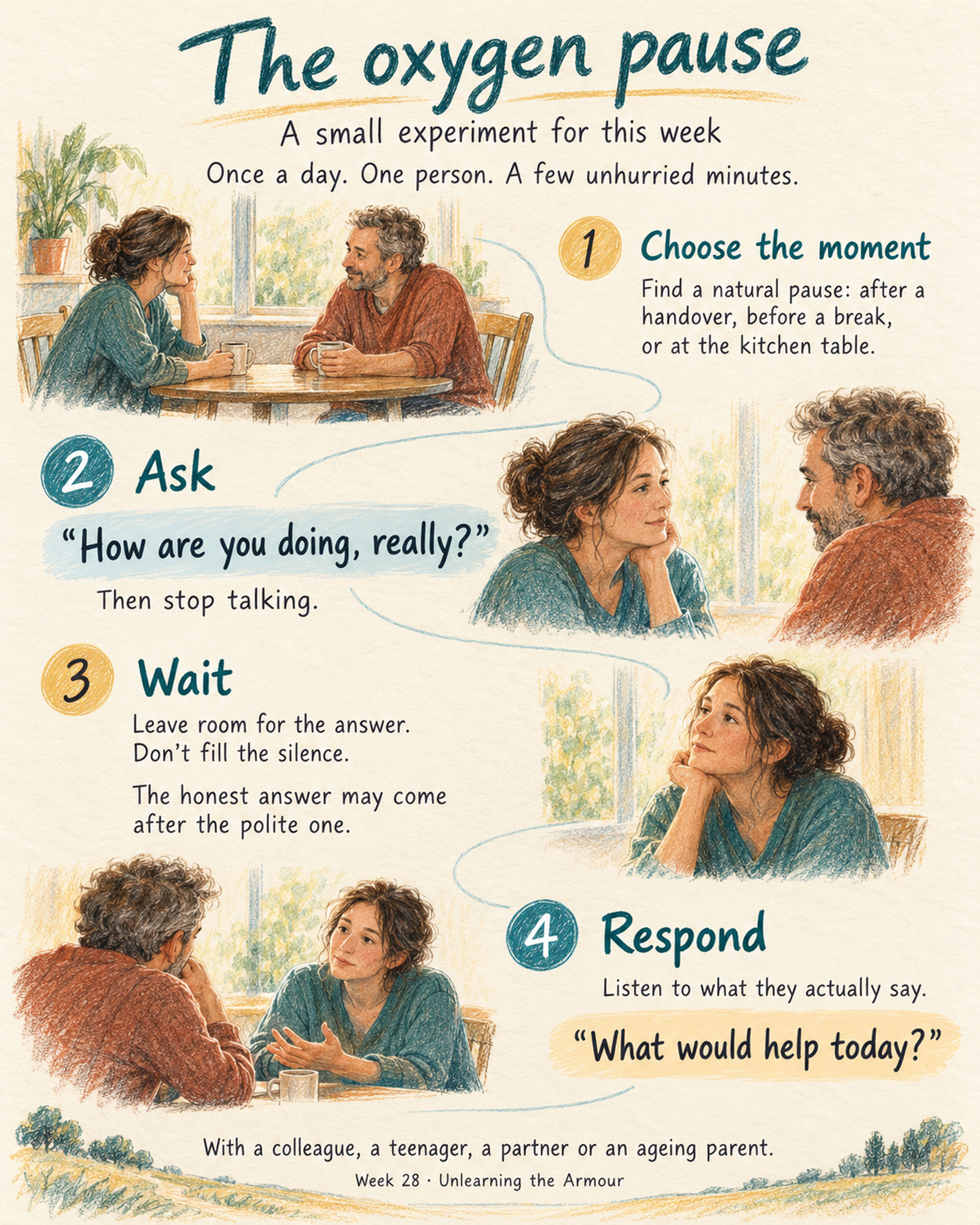
This week’s experiment: “The Oxygen Pause”. Once a day, choose a natural pause, such as after a handover, before a break or at the kitchen table. Ask one person “How are you doing, really?”, then stop talking and wait, because the honest answer often comes after the polite one. Respond to what you actually hear, and if they’re tired, ask “What would help today?”
It’s easy to offer this to people we already trust, but support inside a familiar group may just be loyalty. Culture is tested at the edge of familiarity, with the bank nurse, the locum or the new starter who doesn’t know where anything is kept. The real question is whether trust can begin with a stranger, and someone has to go first.
Listen to the full episode below.