
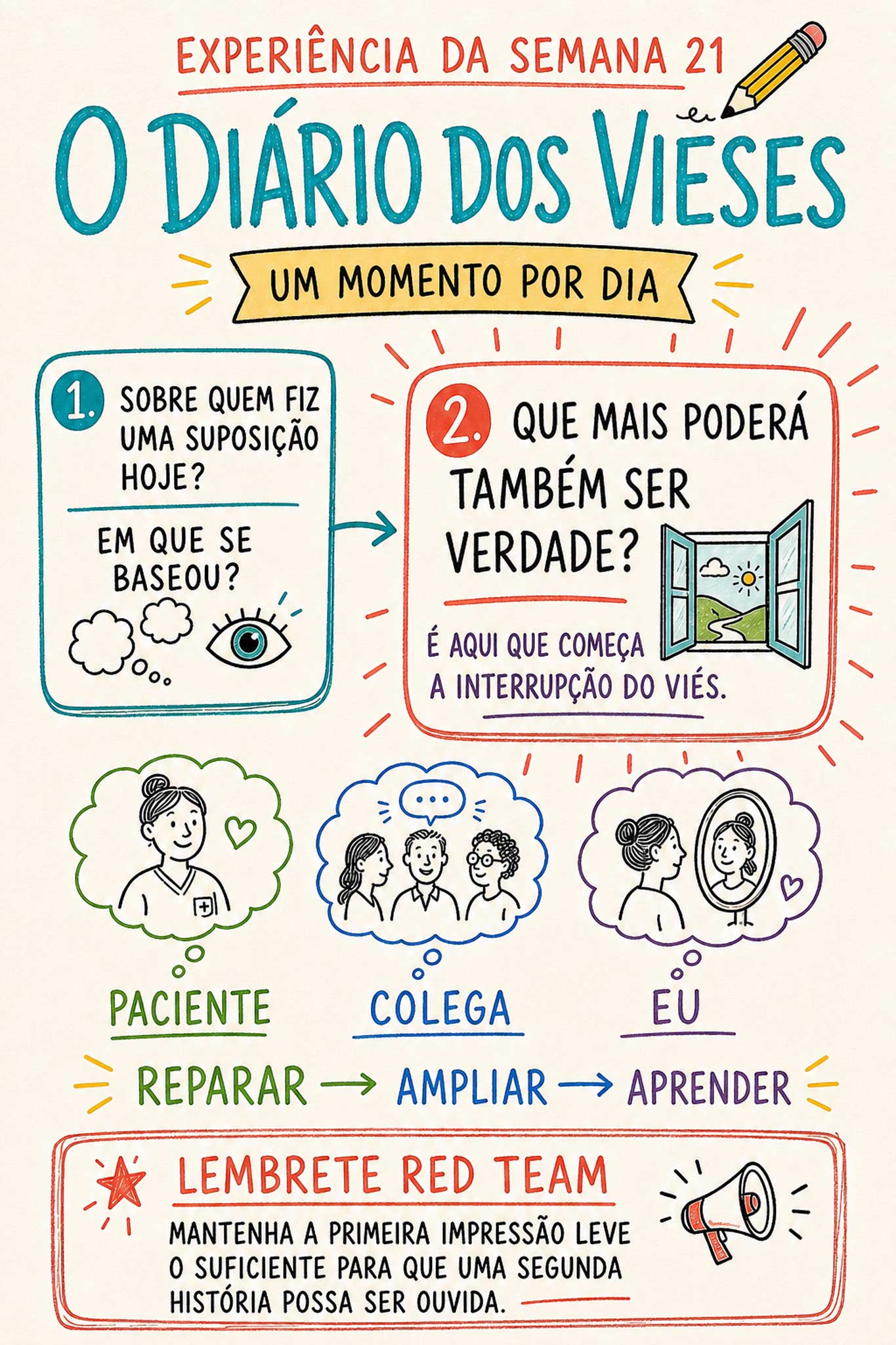
A versão em português do cartaz desta semana, sobre a história que chega antes das provas e sobre perguntar o que mais poderá ser verdade, está disponível aqui.
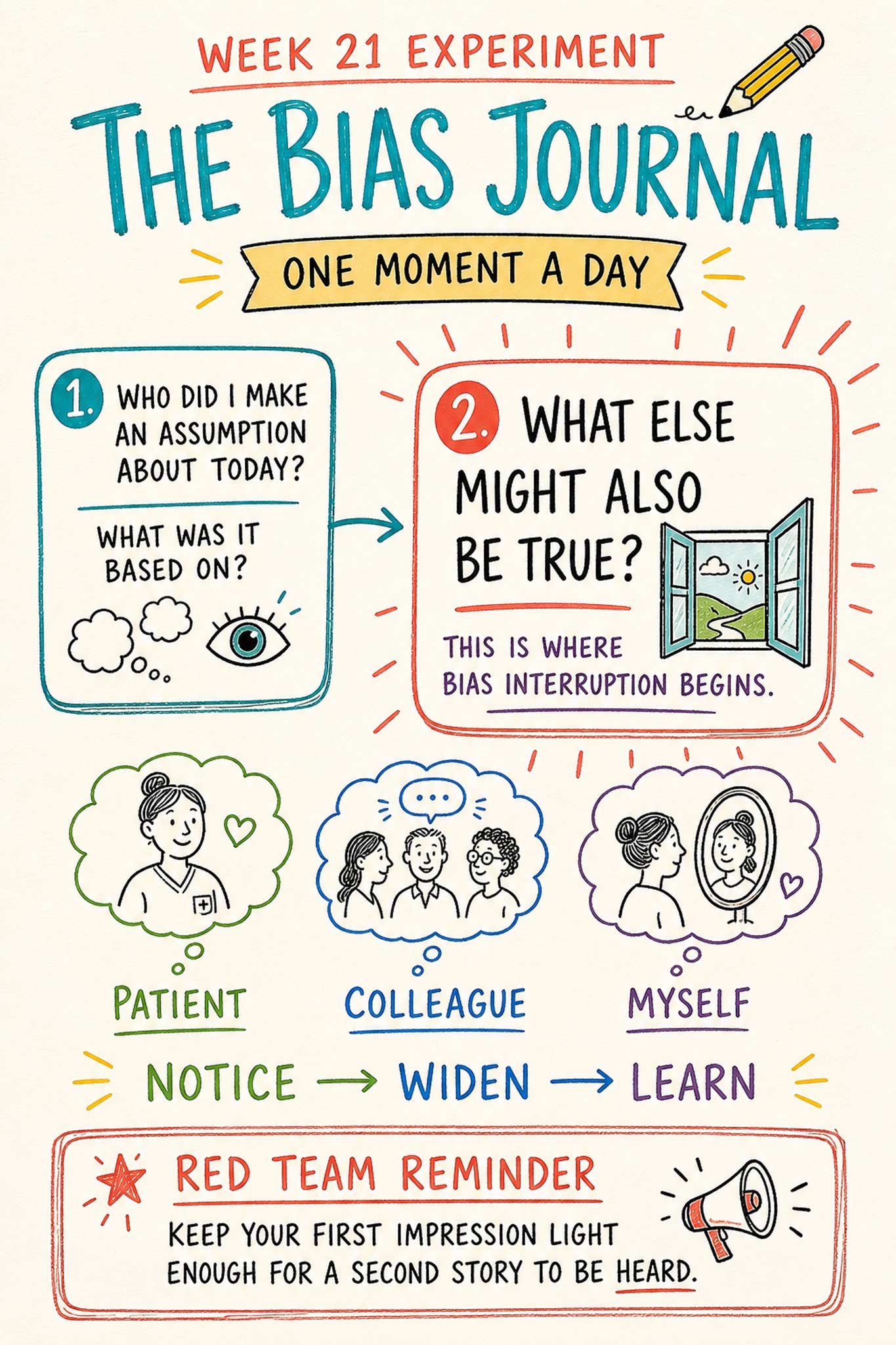 Week 21 of Unlearning the Armour goes to something that happens before a conversation ever begins. You read three lines of a referral and something shifts — your jaw tightens, your curiosity narrows. You haven't met the person yet and you haven't asked a single question, but the story is already running, and when they walk through the door they aren't only bringing their symptoms: they're having to walk through the version of themselves you've already written. Dr Toomas and Dr Sarah are careful not to treat this as a moral failing. Healthcare runs on pattern recognition — one second with an ECG and you know. The trouble is that shortcuts don't announce themselves. They feel like experience, like common sense, like intuition. The conversation ranges from the tired registrar called at two in the morning, to who gets described as lovely on the ward round and who gets described as hard work at handover, to the older patient labelled confused who may simply be dehydrated, or frightened, or ashamed to admit they didn't understand the words.
This week's experiment: The Bias Journal. At the end of each day, write one short entry around two questions. Who did I make an assumption about today, and what was it based on? And then — this is where the whole practice lives — what else might also be true? The aim was never to become bias-free. It's to be less captured by the first story the mind tells us. Sometimes that story is right, but it still has to earn its place rather than win because it arrived first.
Listen to the full episode below.