Getting Ready for Winter — Keeping Warm, Well and Connected
 Winter can be a beautiful time of year, but for some people it can also be a difficult one. The cold affects our hearts and lungs. The dark can affect our mood. Respiratory infections become more common, and for some people, simply keeping the house warm can become a financial struggle.
So this week I want to talk about getting ready for winter — not just avoiding illness, but making sure that we, our families and our neighbours are prepared.
First — think about your vaccinations
Winter is when we hear a lot about flu and COVID, but there are other vaccinations that are important too.
If you're 65, it's worth checking that you're up to date with your flu and pneumococcal vaccinations, and you may also be eligible for shingles vaccination. At 70, shingles vaccination is particularly important. At 75, there are several vaccines to think about, including flu, COVID and RSV, depending on your circumstances. And if you're pregnant or have certain long-term health conditions or are immunosuppressed, you may be eligible for additional vaccinations.
The important thing is: don't assume you're not eligible because you haven't been contacted. Check with your GP surgery, pharmacy or the NHS.
Then think about the cold
Cold weather makes our blood vessels constrict, which means the heart has to work harder. Cold air can also irritate the airways and make breathing more difficult, particularly for people with asthma or COPD.
So keep warm. - Keep moving.- Make sure you have your medication and inhalers. And if you're going outside in very cold weather and have breathing problems, covering your mouth loosely with a scarf can help warm the air before you breathe it in.
But there's something else we need to talk about.
Is your home warm enough?
For some people, this isn't a simple question. If you're worried about your energy bill, you might be turning the heating down — or not putting it on at all. But a cold, damp home can affect health, particularly for people with heart and lung conditions, older people and children. So if you have damp or mould, don't just accept it as something you have to live with.
If you're renting, tell your landlord. If you're a council tenant, report it. And if the problem is that you simply can't afford to heat your home, ask for help.
- Norfolk Citizens Advice has energy advisers who can look at your circumstances and help identify support that may be available.
- Norfolk Warm Homes can also help eligible households with energy-efficiency improvements, making homes warmer and potentially reducing energy costs.
But what if your home is cold and you can't solve that immediately?
This is where I think we need to think differently about winter. We need warm spaces. A warm space doesn't have to be complicated.
It could be a community centre, a library, a café, a church, a community hub or another welcoming local building.
- Somewhere you can sit.
- Somewhere warm.
- Perhaps have a cup of tea.
- Perhaps meet another person.
- Perhaps find some information or support.
- And importantly, somewhere where you don't have to be ill to walk through the door.
Great Yarmouth already has many community buildings, cafés and voluntary organisations that provide pieces of this picture.
So perhaps this winter we need to ask:
Could we connect them together? Could we create a local network where people know: “If my home is cold, if I'm lonely, if I'm struggling, where can I go?”
And let's talk about the dark
Winter isn't only about temperature. The shorter days can affect our sleep, energy and mood. So get outside in daylight when you can.
- Open the curtains.
- Sit near a window.
- Keep moving.
- Keep your routine.
- And keep connected with people.
There is a big difference between saying: “I don't like dark winter mornings.” and “Every winter I become withdrawn, exhausted and depressed.”
If winter regularly affects your mental health, please don't simply wait for spring. Talk to your GP — there is help available.
And this brings me to neighbours
Winter is a time when being a good neighbour can make an enormous difference.
You don't need to become someone's carer.
- Just knock on the door.
- Give them a ring.
- Ask:
- “Are you warm enough?”
- “Have you got enough food?”
- “Have you got your medicines?”
- “Are you getting out?”
- And perhaps the most important question:
- “How are you?”
- But remember — you don't have to do everything yourself.
If you're worried about someone, help them connect with the right service.
And if you're the person doing all the helping, remember to look after yourself too.
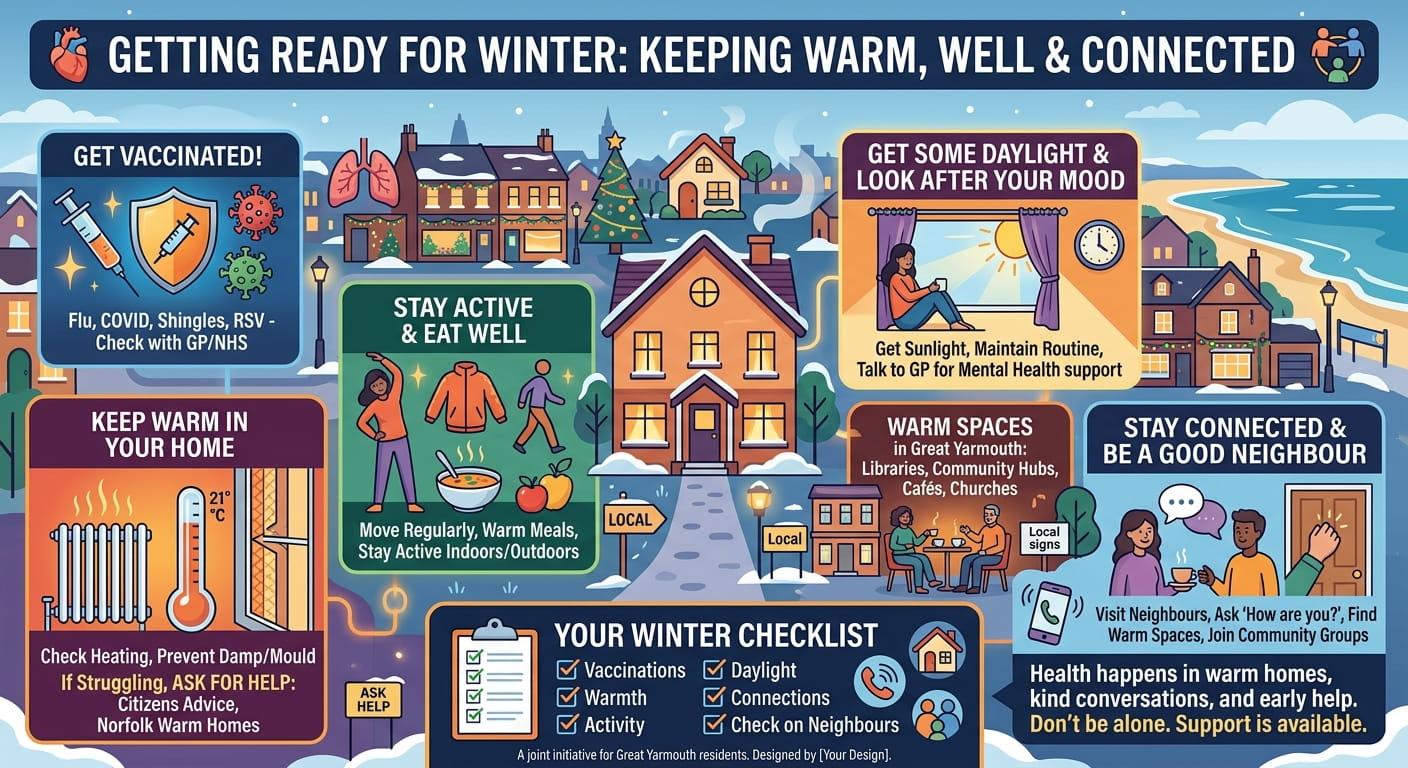
So my winter checklist is very simple
- GET VACCINATED.
- KEEP WARM.
- KEEP MOVING.
- GET SOME DAYLIGHT.
- STAY CONNECTED.
- CHECK ON YOUR NEIGHBOUR.
And if you are struggling — ask for help early. Because winter health isn't just about preventing flu. It's about hearts and lungs, homes and heating, food and money, loneliness and mental health.
And perhaps most importantly, it's about remembering that health doesn't only happen in hospitals and GP surgeries.
- Sometimes health is a warm house.
- Sometimes it's a cup of tea.
- Sometimes it's a walk in the daylight.
And sometimes it's simply someone knocking on your door and saying:
“I just wanted to check you're alright.”
This winter, let's make sure that nobody in our community is left feeling that they have to manage alone.